


April 3, 2023
Alltech's Nick Adams: Insights on mycotoxin risk assessment and mitigation
An eFeedLink Exclusive Talk
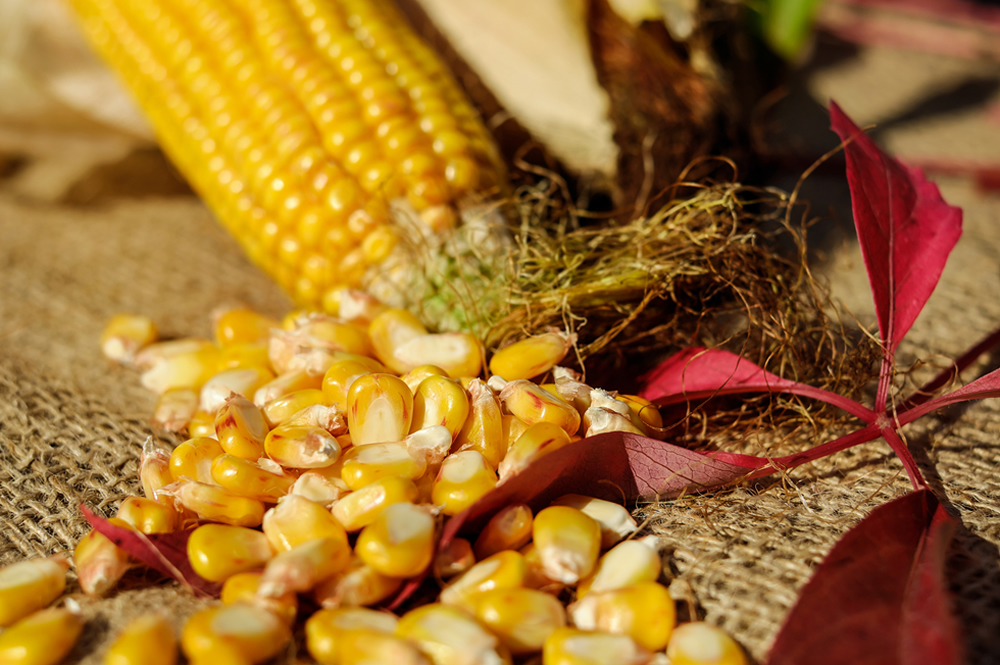
The threat of mycotoxins in animal feed remains a top priority for the agriculture industry.
To better understand this challenge, eFeedLink speaks to Nick Adams, global director of mycotoxin management at Alltech, during the VIV Asia 2023 trade show in Bangkok, Thailand.
Adams shares the intricacies of mycotoxin risk analysis and both global and regional perspectives on mycotoxin contamination.

Nick Adams, Alltech's global director of mycotoxin management.
Nick Adams: We prioritise harvest analysis as a means of estimating potential risks. Many mycotoxin reports evaluate risk based on a calendar year and look at its potential historically. However, this method may not accurately reflect the quality of the feed that will be used in the upcoming year.
At Alltech, we provide information on grain from a specific harvest, informing customers of the potential risks associated with it and how they should move forward. Our approach differs from a general mycotoxin survey and involves working with our field teams to obtain random representative samples from various countries.
We're not specifically searching for risk. Instead, we aim to find samples from the main grain-growing areas to analyse and provide an extent of the risk that we see.
In Europe, we partner with SGS. They have a comprehensive network and verification focus, which enables them to collect samples meticulously. While SGS collects most of the corn samples, Alltech collects the majority of small grain samples, such as wheat and barley. SGS performs tests for six mycotoxins, and we test for 54 mycotoxins.
Although there are differences in the exact profiles, we can still categorise them into mycotoxin families for consistency in our reporting.
At the fundamental level, we employ what's called a REQ (risk equivalent quantity) system. When we examine all the mycotoxins present in the sample, REQ evaluates the risk collectively. Each sample has individual levels, but we have one REQ number. This enables us, for example, to compare the risk levels of corn between different countries or regions easily.
We first concentrate on the harvest and determine the optimal analysis method available in a specific country or region. Then we consider how to communicate the risk. While we do that based on individual mycotoxin levels, the REQ level offers a simplified interpretation of the entire risk.
You mentioned comparing Alltech's mycotoxin analysis method to those that rely on historical data. Could it be possible that historical data is more susceptible to unexpected future events (like climate change) that may influence the results?
Nick Adams: Yes, all mycotoxin data is subject to change. For example, when we conduct import analysis and risk assessment on the global supply chain that's imported into Asia, that risk may change during shipping at sea.
The harvest data is not perfect because the risk of mycotoxins can change even after the harvest analysis. The impact of climate on mycotoxin levels is significant, and every growing season can differ from the previous one.
If we consider a calendar year, it includes a mix of harvests. For instance, if you harvest grain in September or October, and plan to use it next September or October, the historical data for that calendar year includes nine months of old data and only three months of new data. Alltech's harvest analysis thus focuses on the three months of new data to provide a better picture of the risk moving forward.
At the farm management level, what factors continue to be persisting problems that engender the proliferation of mycotoxins?
Nick Adams: Various factors, such as tillage type and crop rotation, determine the mycotoxin levels in the grain during harvesting, making it the most significant risk factor. This risk factor slightly changes when you store the grains in a silo, export the grains, produce the feed and transport them to the farm. Depending on how the farm stores the feed and for how long, the risk can potentially increase.
Hence, it is essential to maintain clean silos and feeders and ensure that the feed is fresh. Additionally, it is vital to prevent the stock from being stored for an extended period while also maintaining dry feed stores. Neglecting these factors can increase the mycotoxin risk when the feed is on the farm.
It is important to know that feed manufacturers are faced with the challenge of always having mycotoxins present in the feed, although, most of the time, they are below regulatory levels. It is crucial for farmers to realise that these mycotoxins can still have an impact on the health and performance of their animals.
Ultimately, feed manufacturers cannot make feed with no mycotoxins. The reality is that most of the mycotoxin risk comes with the feed that the farmers purchase. It is necessary to have a balanced approach in dealing with this issue, as the problem starts way back in the countries where the feed originates.
As such, it is important to communicate to farmers that, when faced with mycotoxin-related situations, we should work together with the feed manufacturers to find solutions.
Alltech is not the only company to release reports on mycotoxin contamination. What kind of perspectives and considerations do you think livestock and feed producers should adopt when looking at a variety of such reports?
Nick Adams: There can be a lot of data associated with these reports, so people should try to interpret it at a level where they can (pragmatically) use the data to make decisions.
Often, looking at several individual data can be too granular. The key thing is to identify the big-picture trends. For a particular region, we need to determine whether the risk is high, moderate, or low for the growing season. Understanding this will help us make decisions.
The risk consists of individual mycotoxins, but it is also a collective risk. That's why we focus significantly on REQ, as it allows us to easily compare the risk between countries and regions. One can be provided with many individual mycotoxin data points from various countries. However, most people can't interpret them.
If we assign a REQ value to the data, then it becomes clear. This is how we can help people gain more from the report because they can interpret it more easily.
For example, I can see that corn has 1.5 times the level of mycotoxin risk than wheat, or corn from another region has a risk level that's either higher or lower, and this is because risk levels are made quantifiable with a number. This is what makes our report helpful for people to interpret.
Please share with us your views on the mycotoxin risk situation in Thailand and the Asia-Pacific. How is Alltech working with stakeholders in these regions to manage mycotoxin risk?
Nick Adams: We tend to see that, depending on where the grain is coming from, the risk changes. If we consider countries that are importing grain from places like Latin America, Europe, or North America, we see a mycotoxin profile that's very telling of where the grains come from. For instance, mycotoxin risks from these regions are very fusarium mycotoxin-oriented, and deoxynivalenol (DON), zearalenone (ZON), and fumonisin are some of the key ones.
When looking at regions or countries where they are using local grains, South Asia (particularly India) or Indonesia, for example, have significant risks of aflatoxin and aspergillus mycotoxins.
What the Asian market needs to know is that the risk is going to be very dependent on the origin of the grain.
In many respects, we still see a (global) risk range where it could be anywhere between 50% and 70% of feed being at lower risk, whether they are coming from South Asia with an aflatoxin-type profile or an aflatoxin-dominated profile, or whether it's coming from Latin America with a fusarium-dominated profile. We also see that somewhere between 30% and 40% of feed is between moderate and higher risks.
Only in Asia, we see that 50% to 60% of feed is at lower risk, while 30% to 40% of feed is between moderate and higher risk.
Depending on where the grains come from, the mycotoxins that constitute the risk can vary. Regardless, there is always a similar range of risk concentrated between lower, moderate and higher.
In relation to mycotoxin contamination, what products is Alltech presenting at this year's VIV Asia?
We will be presenting our RAPIREAD system, a rapid analysis kit that links to Neogen's Raptor Integrated Analysis Platform. With RAPIREAD, we have created a data management platform that enables us to extract the results, store them in a cloud system and generate a REQ figure for the user. Through this system, we make it easier for users to take necessary actions.
Depending on the mycotoxin risk and species, there are certain technologies in the Mycosorb range that we can recommend for certain risk levels, species and the life stages at which they are fed. We are also presenting Alltech's Mycosorb A+, our next-generation mycotoxin binder.
What is the takeaway message for Asia-Pacific producers when it comes to managing mycotoxin risks?
The level of risk is largely determined by the growing season and the origin of the grain, which can vary from year to year. So, it is important to establish a quality control programme that takes these factors into account.
For example, when switching sources of grain from Latin America to grain from South Asia, the programme should be adjusted accordingly to test more for aflatoxin. Conversely, if you switch back, the focus may shift to testing for DON and ZON. The programme should be calibrated based on the growing season and the source of the grain.
We have seen this year how weather events are affecting our grains and mycotoxin levels. You only have to look at the recent floods in Australia and New Zealand, droughts in Europe and the shift in precipitation levels across the US; these cause changes in mycotoxin risk. Ukraine is another example, whereby grains have been stuck in the country for so long (due to the war in the country), that their mycotoxin risk increased.
It is important that people realise those developments. The more people can do within their system to separate or use grain differently (in an effective manner), the better. However, this depends on the setup of their feed mill and whether they can separate grain accordingly to manage mycotoxin risk that affects animals at different life stages.
Finally (with Alltech's support), our users can make an informed decision on which mycotoxin mitigation solution would be the most applicable for their feed.
Note: For more about Alltech's mycotoxin mitigation solutions, please visit: knowmycotoxins.com
- Nicholas Yong and Terry Tan, eFeedLink


