


March 25, 2026
Zimbabwe pushing efforts to grow aquaculture industry
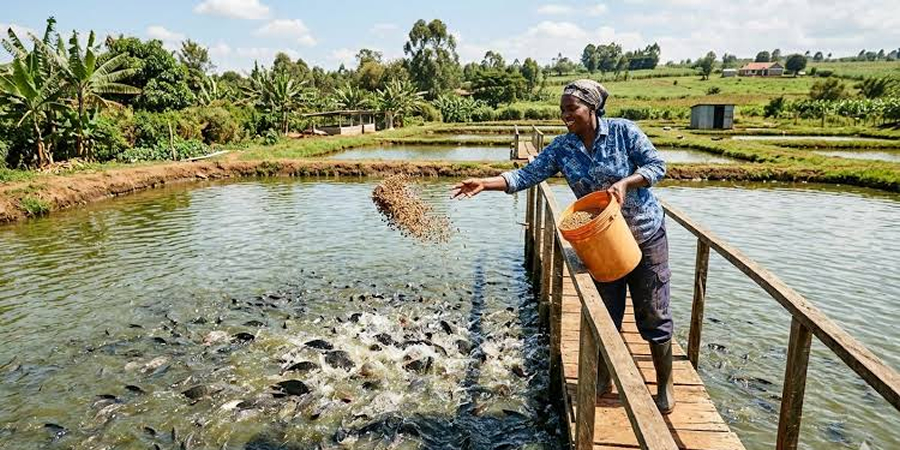
Zimbabwe is stepping up efforts to expand its aquaculture sector as demand for fish continues to outpace local production.
At a Fisheries and Aquaculture Investment Roundtable organized by FISH4ACP in partnership with the Zimbabwe Aquaculture Value Chain Council (ZAqVCC) and Chinhoyi University of Technology, the programme brought together key stakeholders to discuss investment opportunities and financing solutions.
"This is a call to action," said Obert Jiri, Permanent Secretary in the Ministry of Lands, Agriculture, Fisheries, Water and Rural Development, inviting investors to support the country's aquaculture growth.
"Aquaculture is a critical pillar in Zimbabwe's agricultural transformation agenda, and we invite investors to be part of this journey," he added.
"Zimbabwe has the water bodies, climate and market demand to make aquaculture a high-return sector," said FAO Subregional Coordinator for Southern Africa and FAO Representative in Zimbabwe, Patrice Talla. "Demand is rising fast, but local production continues to lag. What we need now is capital and innovation to scale."
Zimbabwe's annual fish consumption is estimated at 70,000 tonnes to 80,000 tonnes, while production remains significantly lower at around 33,000 tonnes, underscoring the need for increased investment.
The sector continues to face several structural constraints, including high feed costs, limited fingerling supply, infrastructure gaps, and restricted access to finance tailored to aquaculture needs.
Financial institutions acknowledged these limitations and indicated willingness to collaborate with stakeholders to design appropriate financing mechanisms.
Through its interventions, FISH4ACP, an initiative of the Organization of African, Caribbean and Pacific States (OACPS) implemented by FAO with funding from the European Union (EU) and the German Federal Ministry for Economic Cooperation and Development (BMZ), aims to make the farmed Nile tilapia value chain more productive and sustainable.
Sara Piccoli, Program Manager for Agriculture, Environment, Private Sector and Trade at the European Union Delegation to Zimbabwe, highlighted the importance of shifting from successful pilot initiatives to scaled, commercially viable investments. "Creating spaces for dialogue between producers, policymakers, and investors is essential if we are to move from pilot successes to scale," she said.
Investment prospects identified during the roundtable include feed production, hatchery and broodstock development, cold chain and processing infrastructure, and out grower schemes to integrate small-scale farmers into commercial value chains.
The government reiterated its commitment to enabling private sector participation through regulatory support, improved access to resources and mobilization of finance.
"This is an invitation to investors to engage early, shape partnerships, and help build a competitive and sustainable aquaculture industry in Zimbabwe," said ZAqVCC Chair, Silvanos Gwarinda.
- Aquafeed.com


