


March 20, 2024
India's chicken prices increase as Ramadan begins
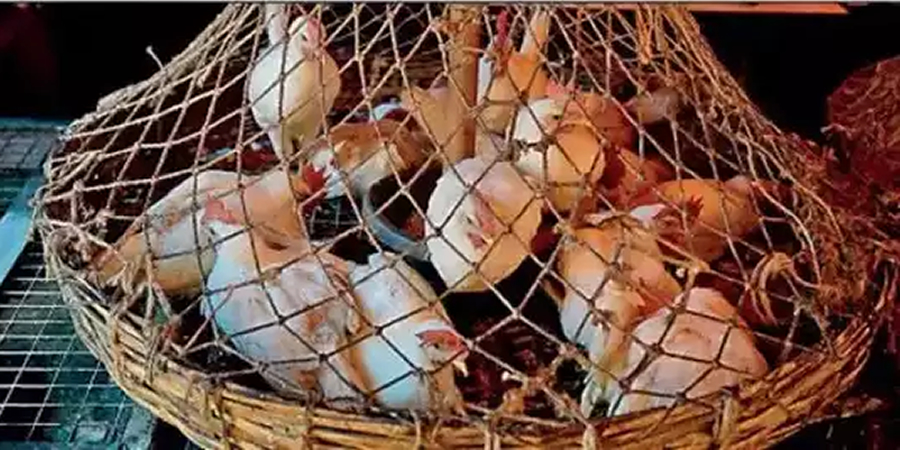
India's chicken prices are on the rise with the onset of Ramadan and due to robust demand.
However, prices are also driven by rising temperatures and increased input costs. Agriculture experts said this trend may persist till April.
In February, broiler chicken prices rose 10% due to limited supplies stemming from the outbreak of bird flu in Andhra Pradesh. Moreover, the escalating cost of feed further drove up prices, as corn prices soared by 20% from ₹22,000 (US$265.34) per tonne to ₹26,500 (US$319.62) per tonne over the past three months. This is attributed to the government's push on ethanol production to achieve the E20 target by 2025-26, amid declining sugar production.
Consequently, chicken prices rose from ₹100-110 (US$1.21-1.33) a month ago to ₹106-130 (US$1.28-1.57) per kilogramme across key farm gates in 'tier-1' cities, including Delhi, Bengaluru and Kolkata, according to spot traders.
Retail food inflation climbed from 8.3% in January to 8.66% in February, marking a 6% increase from the previous year, primarily driven by a sequential uptick in vegetable and meat prices. Poultry price inflation reached 5.7% last month, compared to 4% a month earlier and 2.4% a year ago.
"Rise in demand for broiler during (Ramadan) is expected to lead to a slight increase in prices in March and April," said Pushan Sharma, director-research at Crisil Market Intelligence and Analytics. "Spread of bird flu in the southern states remains a key monitorable."
Rising corn prices have resulted in an increase in poultry feed costs from ₹36,000 (US$434.23) per tonne three months ago to ₹40,000-41,000 (US$482.44-494.50) per tonne. This surge is linked to increased demand from starch mills and ethanol producers, driven by a shortfall in sugar production this year.
Conversely, soymeal prices are witnessing a contrasting trend. Over the past month, soybean meal prices remained steady, hovering at ₹39,000-40,000 (US$470.42-482.48) per tonne across ex-solvent plants in Madhya Pradesh and Rajasthan.
The demand for soymeal is primarily fulfilled by domestic production. Nevertheless, in 2021-22, India permitted the import of 1.2 million tonnes of genetically modified (GM) soymeal to support the poultry industry, after animal feed prices tripled to a record high.
"...with the government aiming to produce ethanol from maize instead of sugarcane, it may result in a shortfall in domestic supplies, affecting both the poultry and biofuel sectors' demand," said Ricky Thaper, treasurer at the Poultry Federation of India. "India needs to allow imports of GM maize and focus on increasing domestic production as demand from poultry, the starch industry and biofuel sectors are rising steadily.
"Any further increase in maize prices will push up feed costs, thereby increasing the cost of production of broiler chicken and egg."
- Mint


