


March 17, 2023
EU pork production slumps to lowest level in nearly 10 years
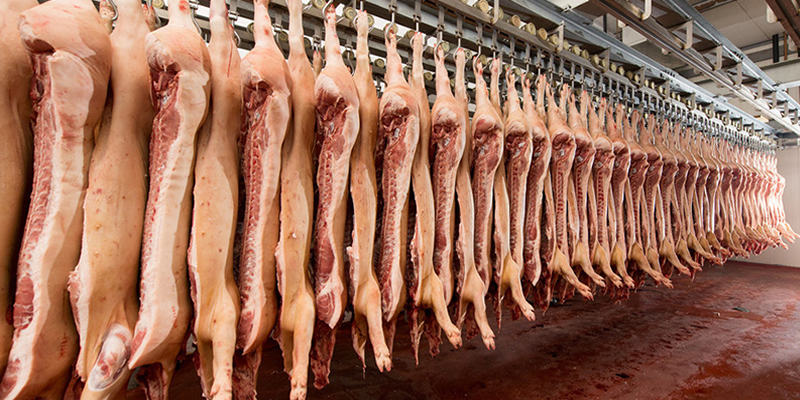
Pork production in Europe has dropped by 5.6% (1.3 million tonnes) year-on-year, to the lowest annual volume since 2014, totalling 22.1 million tonnes in 2022, due to several challenges over the past year, such as rising input costs, continued outbreaks of African swine fever (ASF), new environmental regulations, and increasing consumer costs, UK Agriculture and Horticulture Development Board reported.
All major producing countries experienced significant declines, but Germany was the most notable. Germany has been experiencing production declines since 2017, but these declines have only averaged 2–3% annually. By 2022, the annual decline had reached almost 10%, a loss of almost 500,000 tonnes over the course of a year.
In 2022, production in Poland, Spain, Denmark, and Belgium all decreased by 110,000 to 180,000 tonnes annually.
The production decline has been caused primarily by a reduction in the number of animals slaughtered. The total number of pigs killed for the EU27 was 237 million in 2022, the lowest level since 2014 and a significant drop of 12.6 million (-5.1%) per year. Germany experienced the largest declines at -4.8 million head, followed by Poland at -1.9 million head, Spain at -1.7 million head), and Belgium at -1.1million head.
Due to difficulties European producers and processors encountered in 2022, the EU's swine herd decreased by 5.8%. More significant to the market is the drop the number of breeding sows, particularly the number of sows in swine at -6.2% and -5.5% respectively.
The decline in these sow numbers supports broader industry commentary about tight supplies and suggests that there will be fewer swine available for slaughter in 2023. This might result in increased prices on the European swine market, if domestic consumption remains steady.
- UK Agriculture and Horticulture Development Board


