


March 13, 2026
China's lawmakers vote to update fisheries law
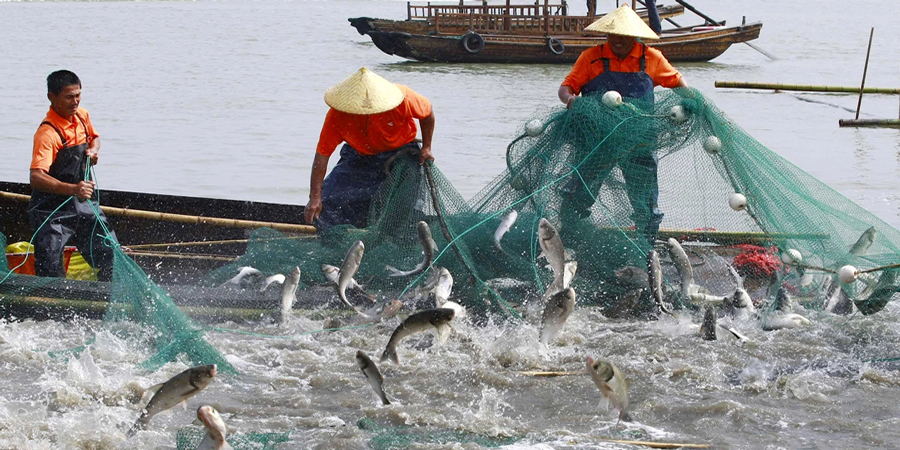
Lawmakers in China have voted to revise the nation's fisheries law.
The revised law, which will take effect May 1, overhauls many sections of China's current legislation.
Among the changes include efforts to crack down on illegal, unreported, and unregulated (IUU) fishing in order to better align with obligations outlined in the Port State Measures Agreement, which China ratified in early 2025.
For instance, articles 55 to 59 of the revised law, as published by the National People's Congress, state that foreign vessels can only berth at particular ports designated by China, while any vessel found to have engaged in IUU fishing activities is forbidden to enter any Chinese port.
Other changes to the law include more stringent regulations on the nation's aquaculture sector, aiming to broaden and strengthen more targeted attempts China has made in the past to eliminate pollution and other harmful effects of fish farming on the environment.
Article 15 of the newly revised law notes that "the state encourages the development of green and ecological aquaculture in oceans, rivers, lakes, reservoirs, and other water bodies, as well as the development of deep-sea aquaculture and international aquaculture cooperation."
Elsewhere, Article 28 of the revised law states that "those engaged in aquaculture production shall protect the ecological environment of water areas and tidal flats, scientifically determine aquaculture density and scale, rationally feed and administer drugs, and ensure that aquaculture wastewater discharge complies with relevant pollutant discharge standards and shall not cause environmental pollution or ecological damage to water areas and tidal flats."
A recent report in the Fengkou financial news outlet said that revisions made to the law are likely to benefit companies with focused and environmentally friendly operations, such as mariculture operations carried out by the Guoxin Development Group.
"The core orientation of the new law is to promote the transformation of aquaculture from extensive and resource-intensive to intensive and environmentally friendly," the report said. "This aligns perfectly with the Guoxin Group's development path of moving offshore, industrial intensification, controllable standards, and land-sea integration."
The report further suggested that Guoxin's shipborne aquaculture model was more environmentally friendly because it shifts operations from nearshore to cleaner, deeper waters 50 to 100 nautical miles offshore, "effectively alleviating the environmental pressure on nearshore areas."
- SeafoodSource


