


March 9, 2026
Saudi Arabia's move to stop poultry imports from Indonesia not going to hurt latter's market, agri official says
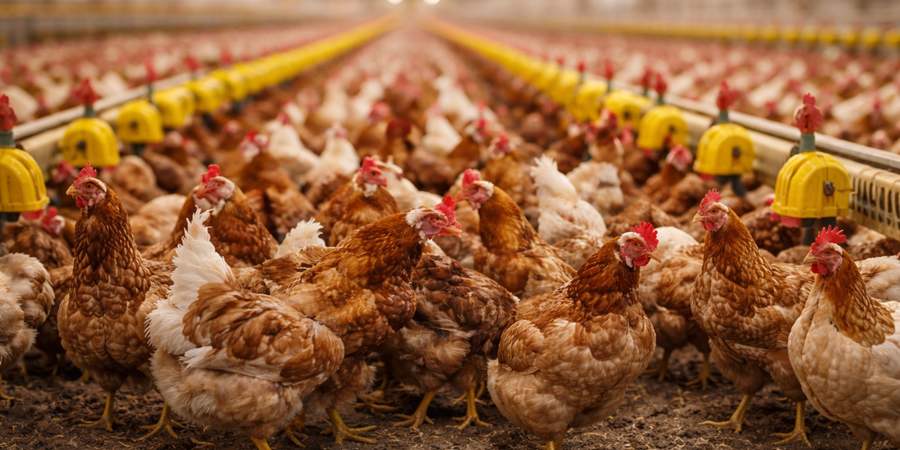
Indonesia's Agriculture Minister, Andi Amran Sulaiman, said Saudi Arabia's decision to halt fresh poultry imports from the country will not hurt the domestic market, arguing instead that it could push exporters to move up the value chain and earn higher margins.
The response comes after the Saudi Food and Drug Authority (SFDA) banned poultry and egg imports from 40 countries, including Indonesia, as part of tighter health controls. Indonesia's Trade Attaché in Riyadh, Zulvri Yenni, previously clarified that the restriction is unrelated to halal certification, but concerns product quality and compliance with health standards, particularly Indonesia's avian influenza-free status.
Amran stressed that the Saudi measure applies only to fresh poultry, while processed products remain eligible for export.
"The restriction is for poultry, but not for processed products. So we process it, the value is actually higher," Amran said at the Agriculture Ministry complex in South Jakarta on March 3.
He underlined that exporters should pivot toward downstream processing, transforming raw poultry into finished goods before shipment. According to him, exporting raw chicken yields far lower returns compared to processed products.
"If I export chicken, let's say the price is Rp 30,000 per kilogramme. If it's a finished product, how much more? It can be double," he said.
Amran maintained that the import rejection will not disrupt domestic supply-demand dynamics. Local production, he said, can still be absorbed through processing channels and redirected to both export and domestic markets.
The policy direction aligns with Indonesian President Prabowo Subianto's downstreaming agenda, which seeks to convert raw commodities into higher-value finished goods to strengthen national economic resilience.
"Downstreaming means we process raw materials into finished products, that's a 100% increase. The same applies to cocoa, coconut and others. That is the government's goal, so businesses can grow well and the people can become more empowered," Amran said.
The government now faces pressure to accelerate efforts to regain international recognition of Indonesia's avian influenza-free status, while ensuring exporters can comply with stricter sanitary and phytosanitary standards imposed by key trading partners.
- Jakarta Globe


