


March 8, 2023
New tech allows farmers to move cattle with their smartphone
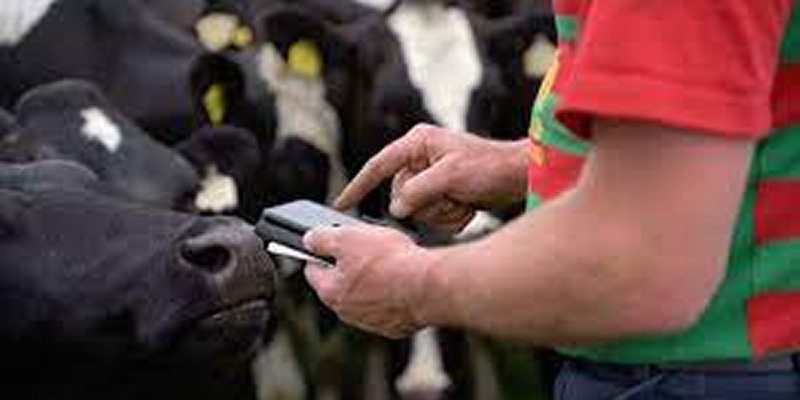
Nofence is a new cattle collar technology made in Norway that has been billed as “the world's first virtual fence for livestock” and is being tested in Alberta, Canada, allowing farmers to move their cattle using only their smartphone, Alberta Farmer reported.
Edward Bork, a professor at the University of Alberta and director of the university's Rangeland Research Institute, who is testing Nofence, said there is a lot of potential for the collars, which work using a virtual boundary.
If the cattle move too close to the virtual boundary set by GPS, it produces a weak electric shock.
Alexandra Harland, a master's student working with Bork who tested the collars at the Roy G. Berg Kinsella research farm, said their research is focusing on the use of the collars in Alberta, such as the possibility of the batteries in the collar dying.
Harland said the two solar panels installed in the collar keep the battery charged and can handle the extreme conditions at pasture.
The Nofence mobile app creates virtual pasture boundaries. The collar will download the data and use that as reference for containing the cattle. App users will be able to see a satellite-view map, which pinpoints the location of all cattle.
Harland said a strong internet connection is required for the full features of Nofence, but the collar system can operate without a web connection. The cattle also need to trained to use virtual fencing.
Bork and Harland set up a virtual fence that matched the physical fence to train the animals. The collar emits an audio warning (a chime) when the animal gets close to the buffer fence. They receive a shock if they stay in the area.
The researchers would divide large paddocks into several smaller ones, each with a true, fully virtual fence line running through it, in order to test the collars. The number of animals that escaped the fence was then counted.
They moved the virtual fence to rotate, which caused the animals to move as well.
Bork said the animals understood how to use the audio tone of the collars. They could make out the green grass, would venture a little bit into the fictitious fence, pick up some food, and then turn around and go back.
The high cost per collar of CND 350 (~US$254; CND 1 = US$0.73) is also another major barrier, but prices may drop as the technology becomes more widespread.
- Alberta Farmer


