


March 5, 2024
An overview of pig farming in Kerala, India
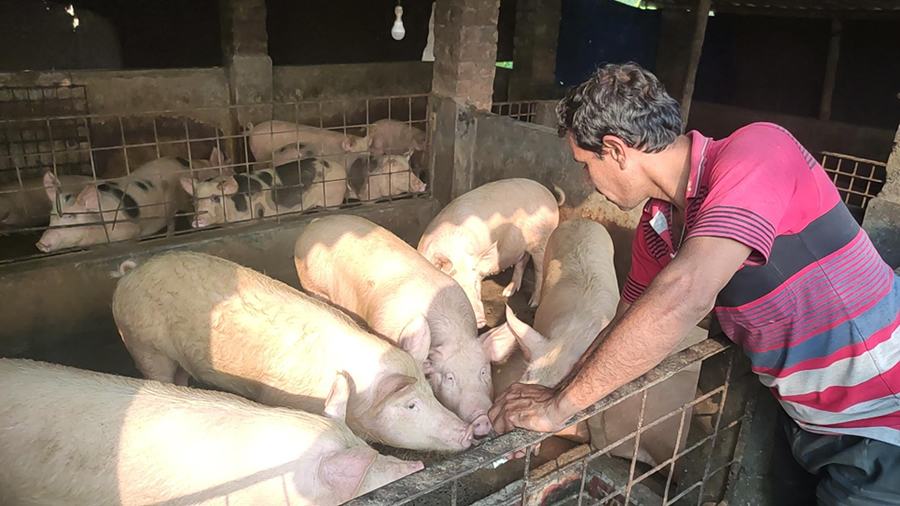
Pig farming contributes to the diversification of agriculture in Kerala, India, with the demand for pork steadily rising in the state.
Apart from fresh pork, there is also a growing market for value-added pork products like sausages, bacon and ham. Entrepreneurs in Kerala can explore these opportunities to diversify their product offerings and cater to a broader consumer base all over India.
Kerala’s pig population has shot up by 86.19% over a seven-year period. This population increased from 55,782 animals in 2012 to 1,03,863 in 2019. Exotic and crossbred pigs account for 97.27% of the pigs bred in the state.
At the same time, the number of animals in the indigenous/non-descript category slipped from 4,965 animals in 2012 to 2,829 in 2019.
Compared to goats and cattle, the rearing of pigs is more profitable, especially when it is properly managed.
Furthermore, the Kerala government has relaxed rules — benefiting pig farmers in the state. Pigs now constitute 3.57% of the total livestock number in Kerala.
However, the sector is not without its challenges, especially in the management of disease outbreaks.
For now, private companies like DLG are helping farmers by providing innovative and computerised breeding programmes, feeding regimes, health management systems and better hygienic practices.
A swine breeding programme in Kerala utilises three different genetic lines, specifically, the Largewhite, Landrace and Duroc breeds. These are subjected to systematic selection and cross-breeding to produce hybrid pigs.
Pig farmers from other Indian states are also seeking guidance and consultancy from Kerala-based companies and farmers.
Furthermore, veterinarians and breeding experts in Kerala are providing services in the fields of reproduction, pig growth, nutrition and health to maximise the profits of farmers.
- Dr. Dinesh Bhosale


