


March 3, 2026
Production of Brazil's fish farming sector surpasses one million metric tonnes for first time last year
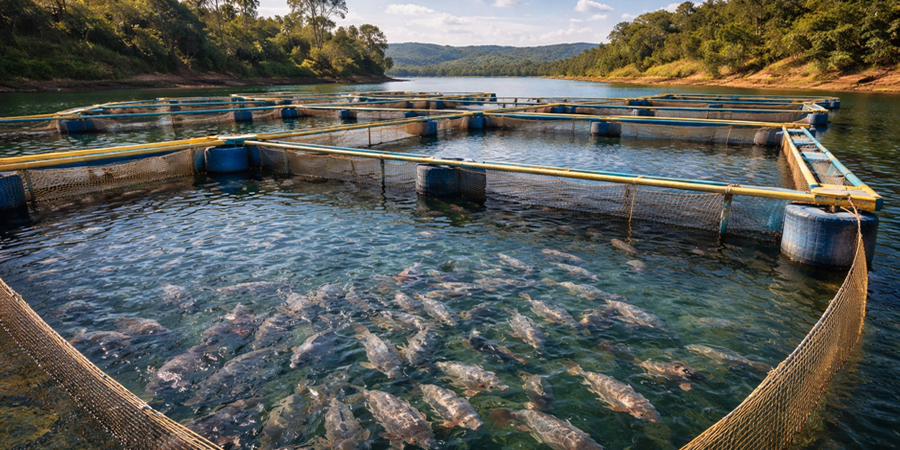
Peixe BR has released the 10th edition of the Brazilian Fish Farming Yearbook 2026, revealing that over the past 10 years, Brazil's fish farming sector has grown by 58.6% and, in 2025, surpassed the historic milestonnese of one million metric tonnes for the first time.
Over the same period, tilapia production surged by 148.2%, reinforcing the species' dominant role in the country.
In 2025, national farmed fish production totaled 1,011,540 metric tonnes, according to Peixe BR. Output grew by 4.41% compared to 2024, despite numerous challenges, including adverse weather conditions—both unusually low and high temperatures—sanitary issues, and price instability.
Tilapia accounts for 70% of Brazil's farmed fish production. In 2025, 707,495 metric tonnes of tilapia were produced, up 6.83% from the previous year.
Since Peixe BR began its production surveys, tilapia output has increased by 148.2%. In 2015, production stood at 285,000 metric tonnes. This steady expansion has been driven primarily by growing domestic and international demand. Advances in genetics, improved fish performance, and a wider variety of value-added cuts, made possible by more sophisticated processing and greater industrial scale, have also supported growth.
The state of Paraná leads the country in tilapia production, reaching 273,100 metric tonnes in 2025, an 8.9% increase over the previous year. The next largest producers are São Paulo (88,500 metric tonnes), Minas Gerais (73,500 metric tonnes), Santa Catarina (52,700 metric tonnes), and Mato Grosso do Sul (38,700 metric tonnes).
In 2025, native fish production totaled 257,070 metric tonnes, down 0.63% from the prior year, marking the third consecutive year of decline. The last period of growth occurred between 2021 and 2022, when output increased by 1.79%. This downturn reflects several limiting factors, including a more restricted market, with consumption concentrated mainly in the North, Northeast, and Midwest regions; the need for greater technological advancement, similar to that seen in tilapia farming; and, above all, the urgent need for further industrialisation.
Rondônia was the leading producer of native species, with 55,200 metric tonnes, down 2.8% from 2024. Maranhão ranked second, increasing production by 9.5% to 42,700 metric tonnes. Mato Grosso followed with 40,000 metric tonnes (up 0.7%); Pará produced 25,000 metric tonnes (up 3.7%); and Roraima ranked fifth with 23,000 metric tonnes (down 0.4%).
Production of "other species" also declined, totaling 46,975 metric tonnes in 2025, 1.75% lower than the previous year. This category, which includes pangasius, trout, and carp, accounted for 4.64% of total Brazilian aquaculture production. This marks only the second decline recorded in this segment since Peixe BR began its survey; the previous drop occurred between 2021 and 2022, when output fell by 3.03%. In both cases, the decline followed strong growth, 17.01% in 2021 and 7.5% in 2024.
The market was also affected by a steep tariff increase imposed by the US government on various Brazilian products, including fish. At the same time, Brazilian producers faced growing competition from tilapia imported from Vietnam. The industry was further unsettled by the possibility that tilapia could be included on a Brazilian government list of invasive alien species, which would create significant barriers for the sector. That decision has been postponed—for now.
"The results presented in this 10th edition demonstrate the strength and maturity of Brazilian fish farming. Even in a challenging year, we surpassed the one million metric tonnes mark and consolidated a decade of consistent growth. Fish farming has moved from being a promise to becoming a leading sector in the Americas, with significant gains in productivity, technology, and competitiveness," said Peixe BR President Francisco Medeiros.
Brazil aims to become a global leader in aquaculture.
"This goal will be achieved through investments in genetics, nutrition, management, equipment, health, production, processing, and, above all, marketing in domestic and international markets," Medeiros said. "Our objective is to become the global leader by 2040."
- Aquafeed.com


