


February 28, 2023
Perdue University team gets grant to study role of lipid droplets in muscle stem cell function
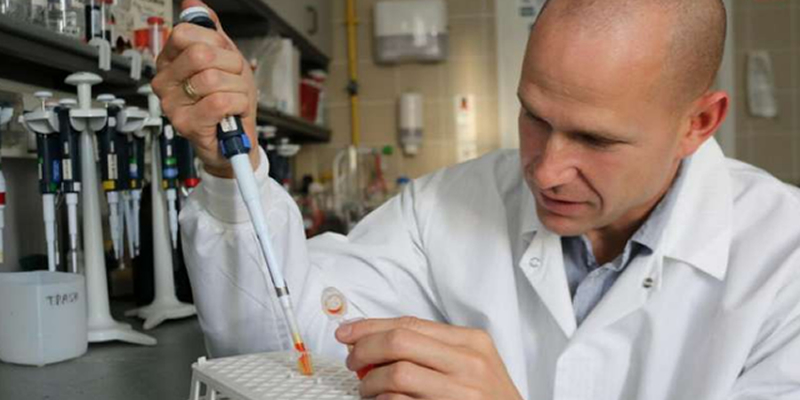
A team of Purdue University scientists led by the professor of animal sciences in Purdue's College of Agriculture, Shihuan Kuang, has received a US$2.5 million grant from the United States' National Institutes of Health (NIH) to define the role of lipid droplets in muscle stem cell function, a study with implications in both humans and livestock.
"Lipid droplets are important as a regulatory component of the stem cell. The content of lipid droplets makes the stem cell function better or worse," said Kuang.
The livestock aspect of the study will delve into animal growth to enhance meat production, quality and taste. Working with Kuang on the project are Christina Ferreira, a developmental biologist with training in analytical chemistry in the Bindley Bioscience Center; James Markworth, assistant professor of animal sciences; and Chi Zhang, assistant professor of chemistry in the College of Science.
The grant follows a study that Kuang and eight Purdue co-authors published in the journal Cell Reports last year showing how fat plays an unexpected role in the fate of muscle stem cells.
"We know that if you perturb lipid droplets, the cells do not do well," Kuang said. "The question now is what do the lipid droplets do in the cell? Do they supplement energy to the cells? Or do the lipid droplets perhaps secrete certain types of molecules that regulate cell function?"
People often think of lipids as bad as they accumulate within the body as fat tissue, Markworth said. The NIH project, however, will explore the potential positive role that lipids may play as important signaling molecules in muscle.
"Right now, we don't really know what types of lipids are found in these droplets," he said.
Markworth is especially interested in the role of lipid metabolites – known as bioactive lipid mediators – in muscle biology.
"Does the type of fat that they contain influence their role? And do their various downstream metabolites play different roles in determining stem cell fate," he said.
Learning more about how lipid droplets influence stem cells could lead to their manipulation to repair muscle damage more rapidly or to heal muscle disease, said Kuang.
From an animal science perspective, "lipid droplets are found in the muscle of livestock species, the meat that we eat," Markworth said. "The composition of lipid droplets in the meat may affect both the taste of the meat and its nutritional value to the human diet. If we can manipulate lipid in the muscle, we could potentially enhance meat quality."
Lipid droplets are among many different types of cogs in the cellular machinery. At the Bindley Center's Metabolite Profiling Facility, Ferreira chemically analyses the lipids and other small molecules related to the metabolic regulation of the muscle stem cells that the team is studying.
"When cells change their lipid composition, they change their roles in metabolism," she said.
Ferreira uses an array of highly sensitive techniques, including two developed by Purdue's Graham Cooks, the Henry Bohn Hass distinguished professor of analytical chemistry, to profile the metabolism of stem cells and chemically screen their associated lipid droplets.
"Stem cells are very rare. They appear in small numbers," Ferreira said. Lipid droplets, meanwhile, are difficult to chemically analyse because of their nanoscale size. Thousands of them could lay side-by-side across the width of a single human hair.
Zhang adds Raman spectroscopy to the project. With this imaging method, he measures the compositions of lipids in live cells. Raman imaging exploits the way that molecular vibrations link to light beams to measure chemical compositions.
Zhang also developed an imaging technique that allows the team to monitor the lipid droplets as the stem cells convert to muscle cells and other cell types.
- Perdue University


