


February 23, 2023
Southeast of North Dakota, US, expected to spearhead animal agriculture's growth
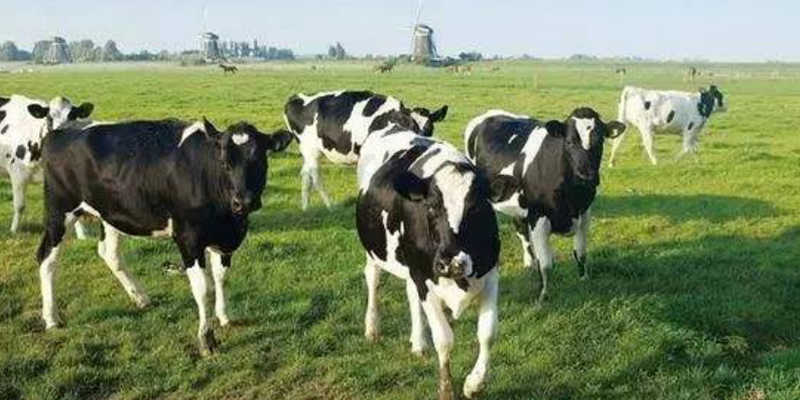
The southeast corner of North Dakota, the United States, could "lead the charge" in the growth of the US state's animal agriculture, according to a former economic development official.
Nathan Sanderson helped promote animal agriculture in South Dakota during the Governor Dennis Daugaard administration when the state saw livestock numbers began to rebound after decades of decline. He spoke this month as the keynote speaker at the North Dakota Livestock Alliance annual meeting in West Fargo.
"I think southeast North Dakota is prime for these kinds of things because it's the area of North Dakota that's closest located to processing opportunities," Sanderson said. "Whether that's dairy, whether that's swine, that I-29 corridor presents a lot of really good opportunities."
That would mimic where the livestock growth in South Dakota has been.
Sanderson said most of the livestock growth has been "East River," or east of the Missouri River, instead of grazing areas of western South Dakota.
He added that instead of backing individual projects, the Daugaard administration promoted animal agriculture in general.
North Dakota helped map what might be the best places for animal agriculture based on criteria such as a roads and other infrastructure, but being far enough away from housing and sensitive environmental areas such as wetlands.
A similar effort has taken root in North Dakota, led by the North Dakota Livestock Alliance.
The North Dakota group hired the same firm that did mapping in South Dakota, according to executive director Amber Boeshans, with two counties — Ransom and Traill — in a pilot project.
"It looks at things such as where's the power? Or where's the water? How's the zoning in that township, how's the zoning in that county," Boeshans said. "All the different things that need to fall into place, … not only for a livestock facility but for agricultural industry. So maybe a feed mill, maybe a (soybean) crusher; whatever that may be."
She said the maps, based on what already is public information, will be owned by the counties and will identify "good, better and best" townships, not individual parcels.
The project is funded with help from the North Dakota Farmers Union and North Dakota Corn Utilization Council.
If the information proves valuable, a statewide project could happen with mappers from North Dakota.
With some dairy processors in need of more milk, Sanderson said South Dakota started its renaissance by setting a goal of adding 30,000 dairy cows at a time when the state only had 90,000. It now has 187,000 dairy cows, more than it had in 1980.
"We set a goal, we worked on outreaching to individuals, and then we followed that up with deliberate action," Sanderson said. "We made livestock development a priority."
North Dakota has gone from 93,000 dairy cows in 1980 to just 14,000 in 2023. The story is similar with hogs.
Sanderson told Agweek that North Dakota's laws that prevent corporate ownership of farmland doesn't mean animal agriculture can't grow.
"I also don't think it's quite as large of a hindrance as what a lot of people would say, simply because you're going to structure your operation in a way that's going to be best suited to the laws that are available to you locally," Sanderson said.
A bill in the North Dakota Legislature that would loosen restrictions on corporate involvement in livestock operations was debated in a hearing but has not been voted on.
South Dakota had similar restrictions on corporate farms but it was tossed out by a court ruling in 2004.
Sanderson said most of the livestock operations continue to be family run.
"The vast, vast majority of these livestock operations are family owned," he said.
- Agweek


