


February 21, 2025
China's layer farming sees profits rebound in 2024
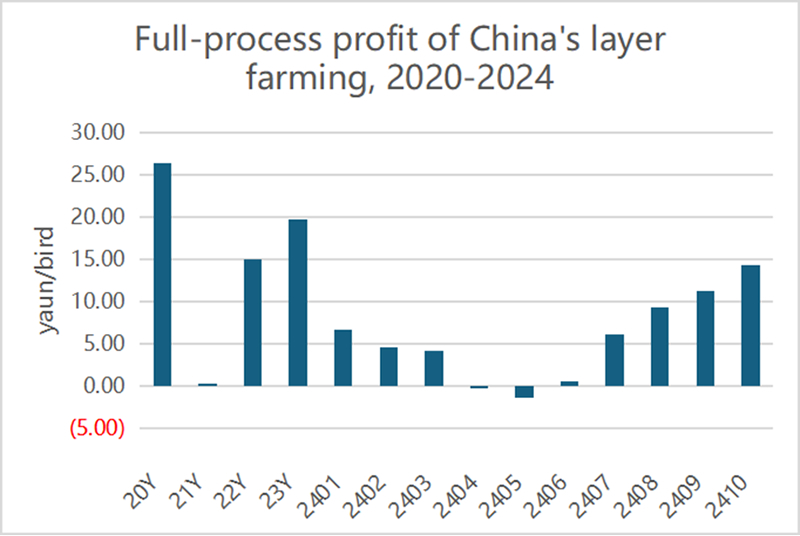
In 2024, the full-process profit of China's layer farming fell before climbing, showing a V-shaped pattern.
Enjoying a profit of ¥6.67 (US$0.93) per bird in January 2024, the layer full-process fell to a deficit of ¥0.13 (US$0.02) per bird in April, returning to the black only in June and surging to ¥14.38 (US$2.00) per bird by October.
Since 2020, the annual average full-process profit was ¥13.39 (US$1.86) per bird, which means it returned to the five-year average level in October 2024.
The fluctuation of the full-process profit of layer farming was essentially due to the movement of farming income, breeding costs, egg prices, and the price of rejected layer hens.
In April 2024, China's egg prices fell from ¥8.37 (US$1.16) per kilogramme at the beginning of the year to ¥6.84 (US$0.95) per kg, before starting to rise in May and staying at a high level of ¥9.00-¥10.00 (US$1.25-US$1.39) per kg from August to October.
In addition, the prices of rejected layers remained high in the third quarter, helping total income to rebound in the second half.
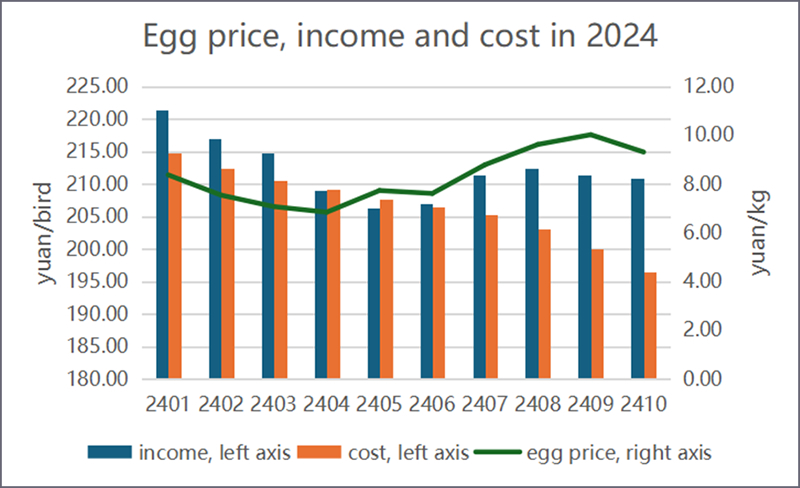
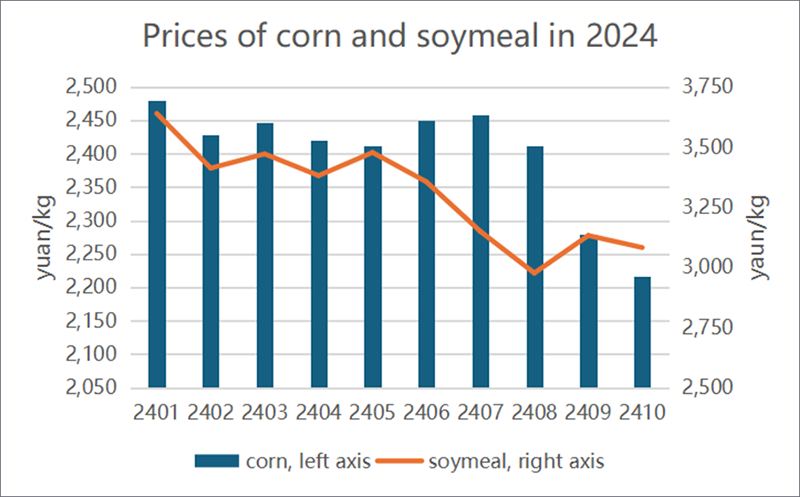
Meanwhile, since 2024, the prices of corn and soybean meal, the main raw materials for feed in China, have fallen from high levels, which also led to the cost of layer farming declining from ¥214.72 (US$30.00) per bird at the start of 2024 to ¥196.45 (US$27.45) per bird in October.
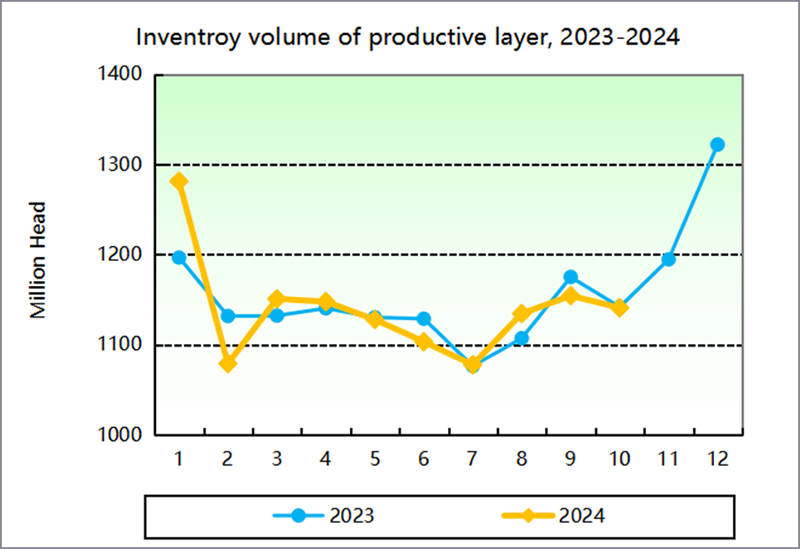
The trend of egg prices from January to October 2024 was related to changes in the inventories of layers. In the first four months of 2024, the number of laying hens fell from a high level, while egg demand was at a seasonal lull during the first half of the year, especially after the Chinese New Year. The price of eggs dropped, causing the layer population to diminish further in May and June and hitting its lowest level in July. This helped stop the price fall of eggs and stimulated a rebound.
In August and September, the pre-Mid-Autumn Festival demand for eggs supported prices to rise to a high level.
The overall decline in breeding costs from January to October 2024 was related to the slide in the prices of corn and soybean meal, the main raw materials of feed.
From January to October 2024, the price of corn fell from ¥2,480 (US$346) per ton to ¥2,216 (US$309) per tonne, a decrease of 10.65%, while that of soybean meal dipped from ¥3,639 (US$507) per tonne to ¥3,082 (US$430) per tonne, a drop of 15.31%.
Layer farming costs were expected to continue to decline before the end of 2024.
Corn prices were also anticipated to fall in November. Additionally, the sales of newly harvested corn in the main producing regions were expected to expedite in December.
Feed producers and traders would be inclined to build inventories, but corn prices were seen as weak; the average price could fall slightly amid ample availability.
The price of soybean meal was projected to rise in November and December. Therefore, feed prices were expected to remain stable to lower in November and December, thus helping to bring down layer farming costs in these months.
Meanwhile, farming returns were expected to increase. The layer population was projected to expand in November and December, similar to past years’ trends.
However, November is traditionally a lull period for the demand for eggs, with this expected to strengthen only in December as the New Year celebration approaches.
Since the overall egg price was high at the end of October, the overall layer farming return was set to remain at a high level in the coming months, while the price of rejected layers remained relatively high.
Overall, the profit of layer farms would continue to rise to around ¥16.50 (US$2.30) per bird from ¥14.38 (US$2.00) per bird in October.
- EFL AG-DATA


