


February 20, 2026
Concerns raised over impact of lower sales prices and rising production costs on Romania's pig farms
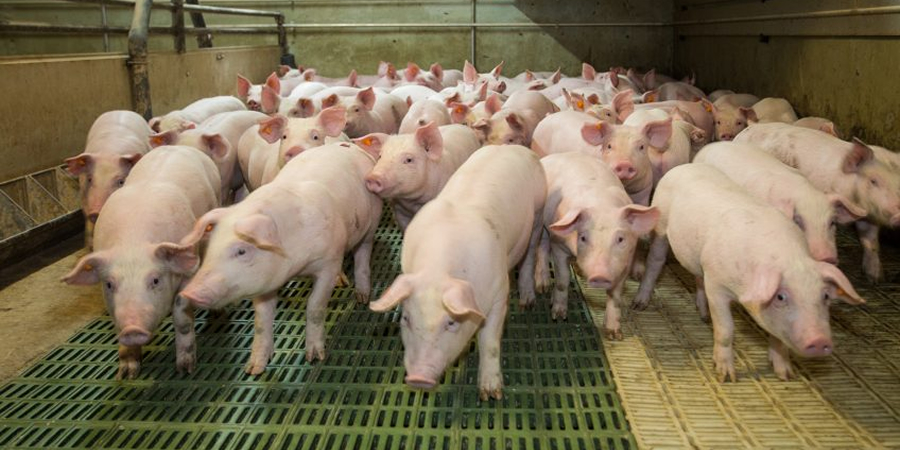
The Romanian Pork Producers Association (APCPR) is sounding the alarm about the critical situation facing authorised pig farms in Romania, which have been severely affected by the rapid decline in sales prices, while production costs continue to rise, according to a recent press release.
According to data from the Romanian Carcass Classification Commission, in week 5 of 2026 (January 26–February 1), the average price of live pigs fell to RON4.95/kg (US$1.09) at the farm gate, with a clear downward trend. At the same time, the real cost of production exceeds RON6.5 /kg (US$1.43), a difference that generates significant losses for producers.
APCPR president Adrian Balaban warns that "this is not a normal market fluctuation, but a collapse that threatens the existence of Romanian farms."
Over the past eight years, against the backdrop of the spread of African swine fever (ASF), Romania has only managed to cover 20–40% of its domestic pork consumption. Although more than 70% of consumers prefer Romanian pork, according to a study conducted for APCPR in 2025, most cannot easily identify it on the shelf or find it consistently in stores.
The association points to massive import pressure, especially from countries recently affected by ASF, such as Spain, and the lack of a national reference price comparable to that in other European countries, such as Germany or Spain, as the main causes of the current imbalance, according to APCPR.
Another major factor is the unauthorised market (small pig farmers supposedly producing for self-consumption), estimated at approximately 604,000 heads in 2025, over 330,000 more than in the previous year, according to provisional data from the National Institute of Statistics (INS). The sale of pigs outside the tax and sanitary-veterinary circuit directly affects commercial farms that comply with strict food safety rules.
The high costs generated by mandatory biosecurity measures, together with the impossibility of exporting due to persistent outbreaks of ASF, severely limit the ability of Romanian farms to sell their production.
APCPR representatives warn that, in the absence of rapid measures and support from processors and retailers, the closure of farms will become inevitable. Reopening them requires very large investments, which are difficult to sustain, and the consequences will be felt both in rural areas, through job losses, and by consumers, through increased dependence on imports and higher shelf prices.
In this context, APCPR has launched a debate on the correct labeling of Romanian pork and the "Well-raised Romanian pig" campaign, aimed at supporting local production.
The pig farming sector in Romania has been facing a profound structural crisis in recent years, characterised by declining livestock numbers, high dependence on imports, and the continuing impact of ASF. Although pork consumption is high, domestic production covers only 20–40% of demand, making this sector the main contributor to Romania's agri-food trade deficit.
On May 1, 2025, the total pig population was 2.922 million, down by more than 97,000 pigs (approximately 3.2%) compared to the same period in 2024.
Authorised pork producers also warn that the situation is critical at the beginning of 2026 due to low sales prices and high production costs, with farms at risk of closure.
Romania imports approximately seven out of 10 pork steaks consumed, with imports on the rise, being considered the country with the highest growth rate of pork imports in the EU.
Although there have been slight increases in production in certain months, the overall trend is one of volatility and decline in domestic production in the long term.
Pork remains the most consumed meat in Romania. However, Romanian producers are facing an accelerated decline in sales prices relative to actual costs, making production unsustainable.
Meanwhile, the sector is also facing an acute labour shortage.
Furthermore, energy, feed, and biosecurity prices are constantly rising.
Bank financing is scarce and costly. In the case of state support schemes, efforts are currently being made to extend the deadlines for investments in pig farms and to grant compensation to affected farms.
Despite the challenges, the sector still offers opportunities, due to the large feed base available, reduced environmental pressure, and strong domestic demand.
— Agroberichten Buitenland


