


February 20, 2023
MLA defends projections claiming Australia's beef herd to expand to 28.8 million head this year
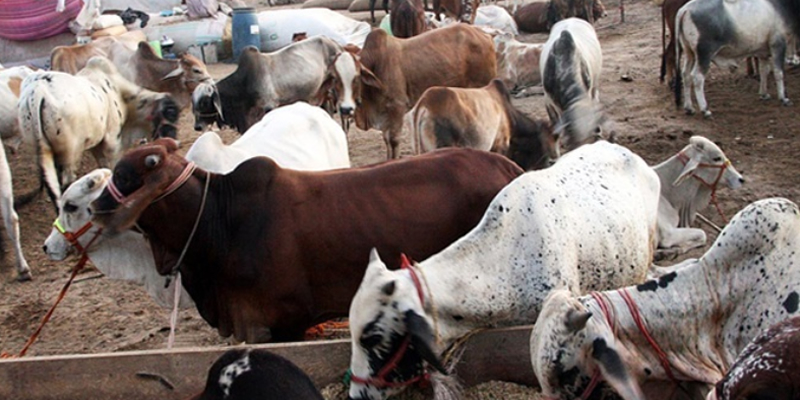
An estimate in Meat & Livestock Australia's 2023 industry projections released recently suggesting that Australia's beef herd will grow this year to 28.8 million head has raised some eyebrows around the beef industry.
Several stakeholders have queried the size of the herd increase figure with Beef Central, convinced that it is exaggerated – especially given that the beef herd hit 30-year lows only two or three years earlier due to drought.
"It's a very bold forecast, and it doesn't do us any favours if the herd size number is overinflated," one large processor said.
The issue of methane calculation from an over-inflated national beef herd estimate has also been raised.
MLA defended the herd number in the latest projections and the methodology used to arrive at it, during an industry briefing.
MLA managing director Jason Strong also argued that it is not uncommon for MLA to receive challenges on its herd size estimates for being too small, as well as too large – and at times in the same annual cycle.
Beef Central questioned MLA's confidence in the accuracy and the methodology of its herd size estimate during the briefing.
"We are extremely comfortable with the 28.8 million head figure, given it has been through a thorough peer-reviewed process, tested with industry," MLA's manager for market information Stephen Bignell said.
Senior analyst Ripley Atkinson said it was important to think about the significance of just how intensive the recent herd rebuild has been, and the relationship between the retention of females, the improved herd productivity being seen after years of investment in genetics and three consecutive La Nina years.
"All of those contributing factors have played a significant role in the advance in herd size that we are forecasting," Atkinson said. "(We trust) the capacity of our model to recognise adjustments, changes and the weather, and the significance of that – even despite the fact that we are building an El Nino event into the model within the next 18 months. Yes, the herd growth will taper off, but the growth is there, and it is underpinned by the key production fundamentals."
Atkinson added there were three key factors that were the hallmarks of why the industry was seeing current growth of this size – the production fundamentals, the stock turnoff rate and the female slaughter rate.
"In terms of the production fundaments, water and grass availability is high – and that is underpinning continued confidence in joining larger numbers of females, to increase numbers," he said. "From that, we're expecting that breeding female numbers will return to pre-2019 (start of the drought) levels. And on top of that, the reproduction conditions for females with grass and water has been very good – that means improvements in branding rates, lower mortality rates, barring any abnormalities in seasonal conditions.
"We know there is going to be a larger number of breeding females, but also the investment that cattlemen have made in genetics is also underpinning the productivity of the national herd, through net feed intake, fertility and growth rate, which will last for years to come."
In terms of stock turnoff rate, MLA estimated it hit its lowest level on record in 2022, reaching 24% last year – well below the long-term average back to 1990 of 31%. The stock turnoff rate shows basically the number of cattle slaughtered or exported live, as a percentage of the total, Atkinson said.
"When it hits such a low level, we know that retention of animals has been very, very intense," he remarked. "It's evident when you look at slaughter numbers being the lowest in 37 years and cattle yardings well down on 2021. It's clearly indicating that the retention of animals on-farm has to be delivered to market at some stage, and that's naturally growing the size of the herd.
"Beyond that, the retention of females (female slaughter ratio) reached its lowest consecutive rate over 15 months on record – eclipsing the 2010-2012 period.
"All this is contributing to the expectation we have in the forecast improvement in cattle numbers out to 2025."
Bignell said there had been significant herd size growth in southern Australia in 2021 and 2022, and that would now move into "really seeing what the rebuild in the north can do."
"We know the retention of females in the north was high last year, and that's going to contribute to that rebuild growing further in 2023," he added. "This year we have the herd growing 4.5%, and at 28.8 million, it will be the largest seen since 2014, at the end of the last long wet period."
Herd growth would taper off after that, if weather conditions normalise.
"We have had three successive years of greatly improved seasonal conditions and the lowest slaughter in 37 years for two years running. That is what is reflected in such high values in our herd estimates for this year," Bignell said.
Moving out to 2025, when the herd is projected to reach 29.6 million head – it will be the largest seen in 46 years. But the reason for that were reduced slaughter for two years and improved seasonal conditions, Bignell noted.
- Beef Central


