


February 18, 2026
Australian government's management of cattle tick infestations questioned after outbreak in tick-free zone
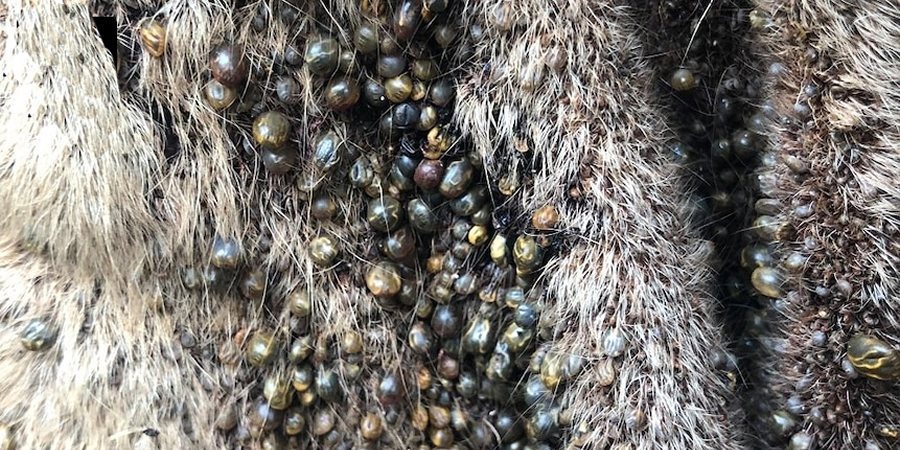
A recent outbreak of ticks in the Cattle Tick Free Zone in Queensland, Australia, has sparked debate on how the Australian government manages infestations.
Earlier in February, Beef Central reported four properties near Taroom had discovered cattle ticks, despite being in the 'clean' or free zone.
"It can't be overstated the overwhelming disappointment in the Department of Primary Industries (DPI) and government in general since this outbreak occurred," commented Taroom cattle producer Alex Sparkes.
"The communication has been non-existent to those in the firing line and furthermore, it appears the advice has been to suppress dialogue rather than allow producers the ability to be proactive, plan, and get organised.
"Certainly, a change in the way these issues are managed from the top down to the those on the ground is required."
In response to a number of questions from Beef Central, a spokesperson for the DPI said the Department provides impacted producers with comprehensive information packs and direct access to Biosecurity Officers.
"Biosecurity Officers assist producers with the technical aspects of eradication and compliance," a written statement outlined. "This outreach extends to neighbouring properties and those identified through livestock movement tracing to mitigate further spread.
"In response to the current situation in Taroom, DPI staff are actively conducting tracing and risk assessment activities to guide surveillance and support local property owners."
Taroom cattle producer Rob Lethbridge is calling for a review into the DPI and how it handles biosecurity outbreaks.
"At the moment, it seems the Department doesn't appear to have in place the management to control any biosecurity issues," Lethbridge said.
"We need to find out where the issues are – whether they be budget, lack of staff, lack of experience or people in the wrong positions, or a combination of all of the above.
"We all know the Department is lacking skills and experience and if there are no changes made soon, we will lose the small amount of experience we have left within.
"The agricultural industries deserve a Department fit for purpose who works with industry, not against it."
Cattle producer Jock Douglas said the question that need to be asked is – "how many tick outbreaks did we have prior to the Labor government relaxing the stringent inspection and clearance system on the Queensland tick line?"
One retired government stock inspector said before major changes were made to tick management, one property with cattle ticks in the free zone was unacceptable.
"There are 213 properties within the Queensland Cattle Tick Free Zone currently identified as restricted places," a written response from the DPI said.
"Over the past 12 months, there were 65 new restrictions recorded and 39 successfully cleared. The majority of these detections are concentrated in areas of the free zone immediately adjacent to the tick line, where environmental conditions are most conducive to cattle tick survival."
Douglas said the 'self-inspection' system introduced into tick management in Queensland in 2016 was never going to work.
"It should be noted that a well organised group of Taroom cattle producers cleared their properties of ticks and moved the tick line. But this was backed by set inspection and clearance under Departmental stock inspectors," he said.
"Now we have a 'self-inspection' system and that was never going to work and the constant arrival of tick infected cattle at Dalby now and outbreaks in clean country are the result. There will be more."
Fred Chudleigh, a former Agricultural Economist with the Queensland Department of Agriculture and Fisheries did an economic evaluation of tick line deregulation in Queensland in 2010.
"The costs of cattle tick control to the Queensland economy were about $10 million per annum (in 2010), undoubtedly much larger now," Chudleigh said.
"This was paid by the Queensland taxpayer and the northern beef producer wishing to move stock across the line.
"Cattle ticks will never be eradicated from Queensland so the producers north of the line will have to continue to manage them as they have."
One cattle producer from Western Australia, Anthea Henwood, said producers should get out of the industry if they can't manage ticks without government help.
- Beef Central


