


February 16, 2024
Component of Massachusetts, US law that restricts pork sales ruled unconstitutional
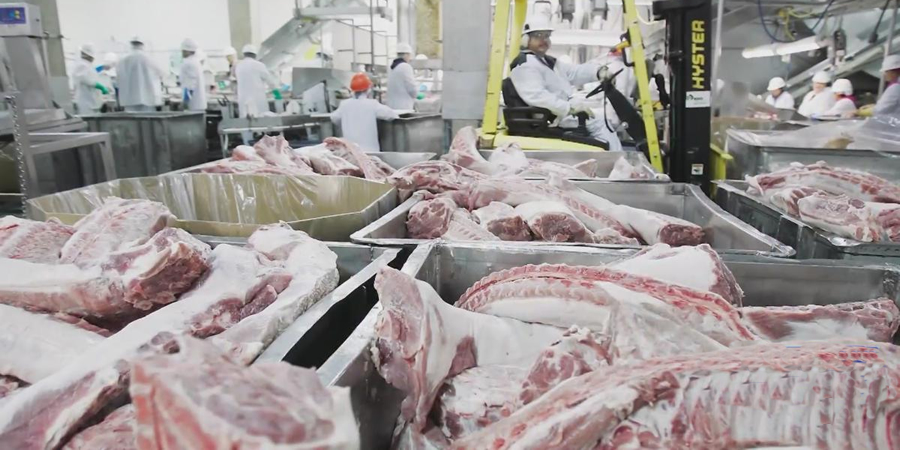
A US federal judge has concluded that part of a law in Massachusetts, the United States, banning the sale of pork from pigs kept in tightly confined spaces is unconstitutional, but can be severed to allow the rest of the measure to survive an industry-backed legal challenge, for now.
In their lawsuit, Missouri-based pork producer Triumph Foods and out-of-state pig farmers argued the restrictions violated the US Constitution.
Those restrictions were part of the Prevention of Farm Animal Cruelty Act, which barred the sales of pork, veal and eggs in Massachusetts from pigs, calves and hens whose confinement failed to meet certain minimum space requirements.
The measure was adopted through a ballot initiative that 77% of voters approved of in 2016.
The lawsuit focused only on a provision that bars the sale of pork originating from breeding pigs who were "cruelly confined" in spaces that prevent them from lying down, standing up, fully extending their limbs or turning around freely.
The law mirrored a similar voter-approved measure in California. Those pork-related provisions were similarly challenged by industry groups, but the US Supreme Court in May last year preserved the law by dismissing the case on a 5-4 vote.
Both cases turned on the US Constitution's so-called dormant Commerce Clause, which bars states from adopting laws that discriminate against or unduly burden interstate commerce.
In light of the Supreme Court's decision, US District Judge William Young in Boston previously dismissed parts of Triumph's case, leaving a single claim that an exemption in the law discriminated against out-of-state pork processors.
The exemption allowed for sales of pork that do not meet the requirements at federally-inspected slaughterhouses in Massachusetts so long as buyers take possession of the pork while on their premises, rather than at grocery stores.
Young ruled the exemption violated the Commerce Clause by discriminating against out-of-state pork processors like Triumph.
However, he said the exemption could be severed without frustrating the law's overall purpose by barring sales of non-compliant pork at in-state slaughterhouses, making the law enforceable in more locations.
"If anything, therefore, severing the slaughterhouse exception from the Act only serves to bolster its purpose," Young wrote.
The judge, though, opened the door to Triumph further challenging the overall law, saying he would allow the company to reassert a previously-dismissed claim that the Federal Meat Inspection Act preempts the state's act.
Triumph said that without the exemption, the act will conflict with the federal inspection law by creating additional, different requirements on how pigs are to be handled than the federal law provided.
"We look forward to demonstrating how the remaining portion of the law intrudes into the federal government's role, and are hopeful the disruption to the country's supply chain soon comes to an end," Triumph chief executive officer Matt England said in a statement.
- Reuters


