


February 15, 2024
Salmon Tasmania: No scientific proof to end aquaculture in Macquarie Harbour, Tasmania, Australia
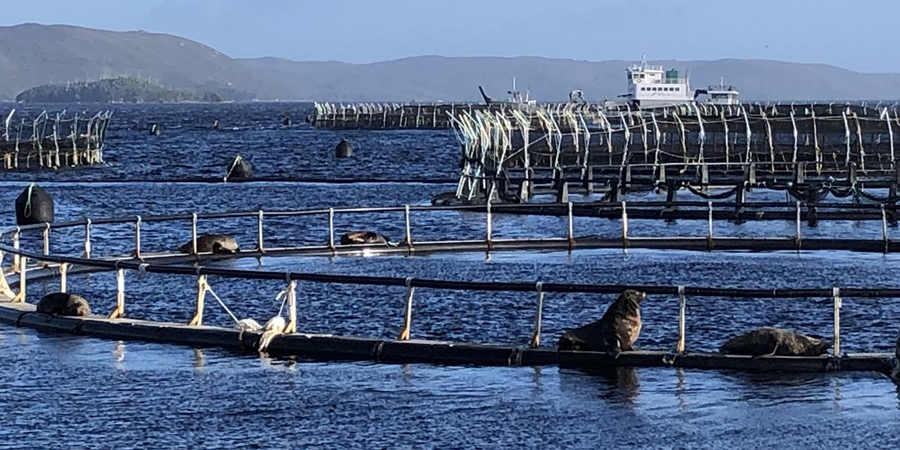
Salmon Tasmania, a salmon farmer organisation in Tasmania, Australia, has publicly released its submission to the Australian federal government's review of a 2012 decision on salmon farming in Macquarie Harbour.
The submission details that there is no scientific evidence that demonstrates removing aquaculture from Macquarie Harbour will ensure the future of the Maugean skate, an endangered species of fish, in its endemic habitat and there is no legal justification for the Australian government to reverse its 2012 decision on salmon farming in the harbour.
The submission also includes new scientific analysis demonstrating the minimal impact of aquaculture on oxygen levels in the natural environment for the Skate.
Salmon Tasmania chief executive officer Luke Martin said it was important for the Tasmanian community to have direct and immediate access to the industry's response.
"Tasmania's salmon industry is highly regulated, informed by some of the best marine scientists in the world, and uses the most advanced technology available," Martin said. "We are committed to transparency with the Tasmanian community, and releasing our submission… so anyone who is interested in aquaculture, or is genuinely concerned about the Skate, can see the facts for themselves, and can have confidence that our industry's presence in Macquarie Harbour is not a critical threat to this endangered species.
"We are confident our industry not only has a long-term future in Macquarie Harbour, but our industry's presence on the west coast means we can have a genuinely positive impact and invest in the effort to secure the skate.
Martin said the submission injected balance and factual information into an increasingly misleading public debate.
"There is no doubt activist groups have cherry-picked conservation reports in their vexatious pursuit of lawfare through the EPBC legislation, purely to attack the reputation of our industry," he added. "This campaign is causing tremendous uncertainty and stress for the residents of Strahan and the broader community of the north-west coast, and it must now stop."
According to Martin, the industry submission demonstrated how compliance with a robust and independent regulatory framework has significantly changed the industry's scale and impact within the harbour compared to 2012.
"Indeed, the decision made in 2012… was to expand the industry from around 10,000 tonnes of production at the time to over 20,000 tonnes per annum," he said. "This expansion was completely reversed, and production is now capped at no more than 9,500 tonnes in the harbour.
"In 2012 there was no independent EPA regulating the harbour. Today there is.
"The innovation and investment of the industry to reduce its nitrogen levels has dramatically advanced over the past decade.
"Put simply, the industry has changed significantly since 2012, and is being regulated and managed effectively for the harbour.
"The industry has always taken its role in the harbour very seriously, and we have looked closely at the impact we are having on dissolved oxygen levels in the harbour and opportunities to further strengthen our sustainability practices.
"Much of the research informing the sharpened focus on the Maugean skate was initiated and funded by the salmon aquaculture industry.
"We have now committed to an unprecedented $7 million oxygenation project beginning in the harbour this month, offsetting the oxygen drawdown of our aquaculture. This is not just about offsetting our impact, but proving the effectiveness of this technology in the unique Macquarie Harbour system as a potential strategy to stimulate oxygen levels in warming weathers and to offset other industrial and natural influences."
Martin said the submission also included new and critical analysis into aquaculture's impact on the harbour.
"New independent modelling by Dr. Ian Wallis shows the minimal impact aquaculture is actually having on the oxygen levels in the harbour – it's as little as 4% in the top level of the water system and 10% at depth," Martin noted. "This is the science, and the fact of the matter is aquaculture is absolutely not a major influence in the oxygen levels in the harbour, or the declining population levels of the skate.
Martin urged Australian Minister for the Environment and Water Tanya Plibersek to proceed with a quick decision on the review and end the uncertainty for the workers, families, businesses and communities of north-west Tasmania.
- Salmon Tasmania


