


February 13, 2025
Results from surveillance focused on contamination of retail poultry meat in France released
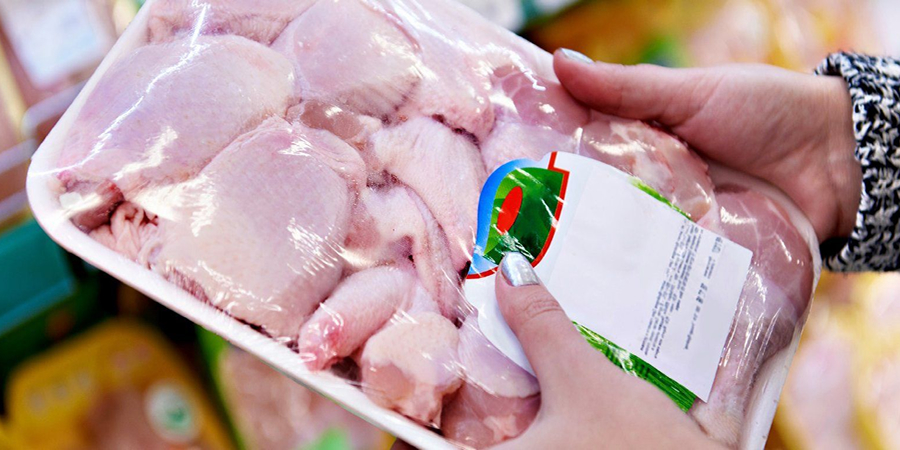
Results of a French surveillance operation have been published, revealing the rate of contamination in fresh poultry meat at retail.
In France, Salmonella and Campylobacter are the two main bacterial agents responsible for foodborne infections, and Clostridioides difficile is often isolated from the stools of patients with digestive disorders. Poultry is recognised as a reservoir for these three pathogens.
An official surveillance plan organised by the Directorate General for Food (DGAL) in 2022 updated data on Salmonella and Campylobacter in poultry products with skin (thighs) and without skin (cutlets) at retail level and also collected related Clostridioides difficile data.
The prevalence of Salmonella, Campylobacter, and Clostridioides difficile was 0.9% of 2,435 units, 49.2% of 2,425 units and 0.9% of 465 units, respectively. For all pathogens, the prevalence was higher on products with skin.
For Campylobacter, a seasonal effect was observed, with the percentage of positives lower in winter than in the other three seasons.
Campylobacter counts showed that 28% of the cutlets and 31% of the thighs were contaminated at levels below 10 colony forming units per gram (CFU/g). However, 2.4% of the thighs and 0.2% of cutlets had more than 1,000 CFU/g, which is the threshold for slaughterhouse hygiene criteria.
There is no regulatory limit in Europe for Campylobacter or Clostridioides difficile in fresh chicken meat at retail. There are rules around Salmonella Typhimurium and Salmonella Enteritidis in fresh poultry meat.
There is also hygiene criteria for Campylobacter involving testing neck skin samples of broiler chicken carcasses. Beginning in January 2025, no more than 10 samples out of 50 should exceed 1,000 CFU/g.
Levels of Campylobacter contamination appeared to have dropped compared to a similar control plan in 2009. Scientists said this could be due to the European regulation on Campylobacter testing at slaughterhouses.
From 2,425 units analysed, 1,192 were positive for Campylobacter. Clostridioides difficile was only found in four of 465 samples.
Among Campylobacter positive units, 344 cutlets and 370 thighs were contaminated at under 10 CFU/g. A total of 187 thigh samples had more than 100 CFU/g and three were above 10,000 CFU/g. For cutlets, 22 were above 100 CFU/g.
Results revealed 23 Salmonella positives from 2,435 units. Seven different serotypes were found including Salmonella Infantis, Salmonella Agama, and Salmonella Derby. Campylobacter was also detected in 10 Salmonella-positive samples.
The prevalence of Salmonella in broiler chicken products had been estimated at retail at 1.7% in 2009 and 1.2% in 2010. This compares to 0.9% in the current survey.
- Food Safety News


