


February 9, 2026
Better production of young fish to support Philippine aquaculture, fisheries authority says
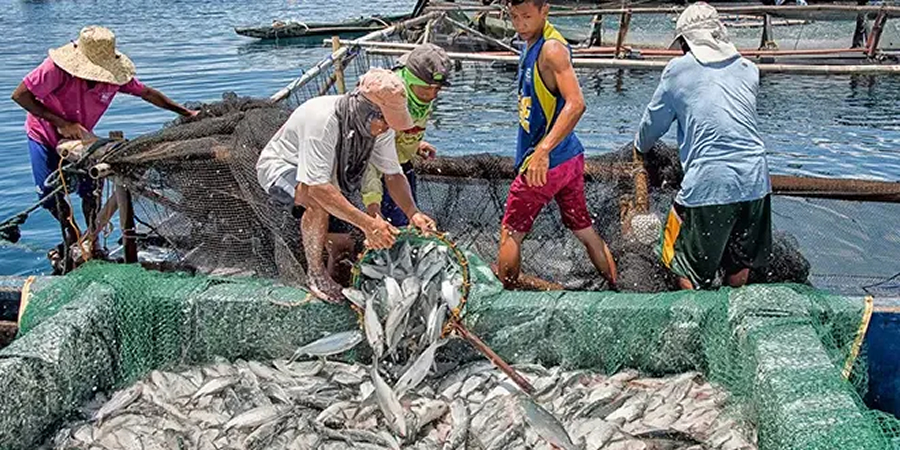
The improved production of young fish will bolster the Philippines' aquaculture sector, which accounts for more than half of fisheries output, the Bureau of Fisheries and Aquatic Resources (BFAR) said.
The BFAR said fry and fingerlings output from its aquaculture technology centers had totaled 335.3 million pieces in 2025, nearly a 3% increase from 325.9 million pieces a year ago.
The BFAR attributed the improved production to the optimal usage of sustainable aquaculture technologies and the proper maintenance of broodstocks under its National Broodstock Development Program.
According to the agency, this will improve access to quality stocking materials and boost aquaculture productivity nationwide.
"With strengthened hatchery operations, focused regional strategies, and stronger partnerships with the private sector, we can further accelerate the growth and productivity of the aquaculture industry and improve the livelihoods of our fish farmers, a goal which is aligned with the directive of (Philippine President Ferdinand Marcos Jr.) on achieving the country's food security," BFAR national director Elizer Salilig said in a statement.
To sustain this improvement, Salilig said regional offices and national technology centers had been instructed to focus more on identifying lead fish commodities in each region and intensify field visits. They are also directed to scale up the operations of community-based legislated hatcheries to better support local fish farming communities.
Fisheries production declined by 2.5% to 1.06 million metric tonnes (MT) in 2025 from 4.06 million MT a year prior, according to the Philippine Statistics Authority (PSA).
Based on the PSA data, fisheries output has been on the decline since 2022. This marks the first time that the overall production volume reached the three million MT level since 2004.
"Decreases in production were noted in commercial fisheries, marine municipal fisheries, and aquaculture. Only inland municipal fisheries posted increments in production during the year," the statistics agency said.
Aquaculture harvested 2.18 million MT last year, down 1.9%, holding a market share of 55.1%.
Commercial fisheries produced 849,498.89 MT, a 2.2% drop. It comprised 21.5% of the total fisheries production.
Marine municipal fisheries reached 749,366.40 MT, a 6.7% decrease, although inland municipal fisheries rose by 7.7% to 178,976.30 MT.
- Inquirer


