


February 6, 2026
Productivity, cost reduction key priorities of world's pork industry this year, report states
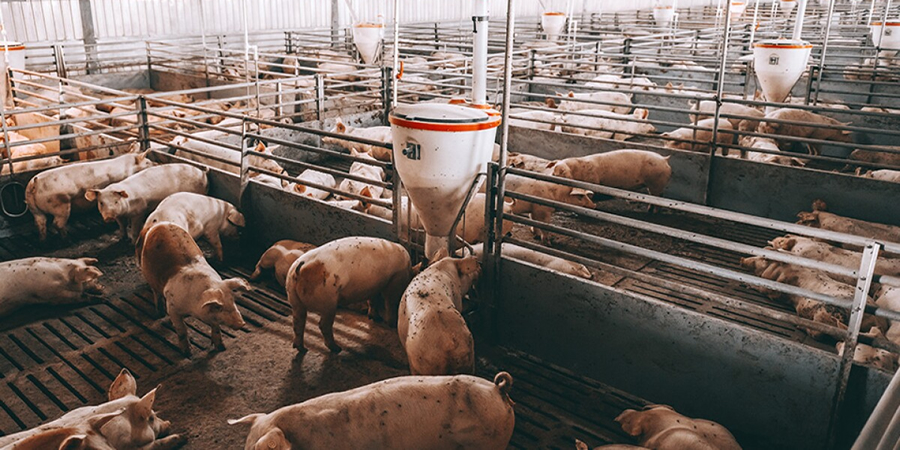
The focus for the global pork industry in 2026, according to RaboResearch's latest quarterly report, will be on productivity, cost reduction and cautious expansion.
As trade patterns continue to shift, affected by policy changes in major countries, the industry is expected to experience uneven production growth. Several factors will impact supply, including biosecurity, disease pressures, relatively high construction costs and trade restrictions.
RaboResearch predicts global production will grow in the first half of the year, driven by major producing countries, with modest growth in the United States, the European Union and China, along with steady growth in in Brazil.
"The driving forces for growth vary by region," said Chenjun Pan, senior analyst of animal protein for RaboResearch. "Productivity improvements weigh more than previously in the US, China, the EU and Brazil, while the large herd size is another main cause of output growth for China."
However, production in the second half will likely slow down and even decline, driven by herd reduction in Spain and China. China recently announced plans to reduce sow numbers by one million, or approximately 2.5%, which could lower the global supply by 1%.
"In China, producers scale back to rebalance, while Spain faces ASF-related trade constraints that lead to herd cuts," Pan explained.
The first case of African swine fever (ASF) in Spain since 1994 was discovered late last year. Although ASF has not affected Spain's domestic herd, the country faces increased pressure from stricter biosecurity and disease control measures. Major importers Japan and the Philippines still ban Spanish pork due to ASF concerns.
ASF's spread remains a challenge in Vietnam and the Philippines as well, hindering local production recovery. Vietnam has reported the most outbreaks, with over 970 cases in 2025 and more than 100,000 pigs lost.
Meanwhile, other animal disease threats like porcine reproductive and respiratory syndrome (PRRS) weigh heavily on production in the US and Mexico.
Adding to the volatility in the industry, major importing countries are updating their trade policies. Mexico will introduce import quotas to non-FTA suppliers and launch anti-dumping and anti-subsidy investigations into US pork. Then, China is imposing anti-dumping duties on EU pork imports.
RaboResearch noted that, in 2025, global pork trade showed uneven performance as Brazil recorded 12% export growth, while other key exporting countries, including the US and Canada, saw single digit declines.
Going into the new year, Brazil once again stands out as the only top producer expanding meaningfully, with 3% to 4% year-over-year herd growth expected for 2026.
- Meat + Poultry


