


February 2, 2026
South Korea's fisheries project aims to achieve annual seafood production of four million tonnes by 2030
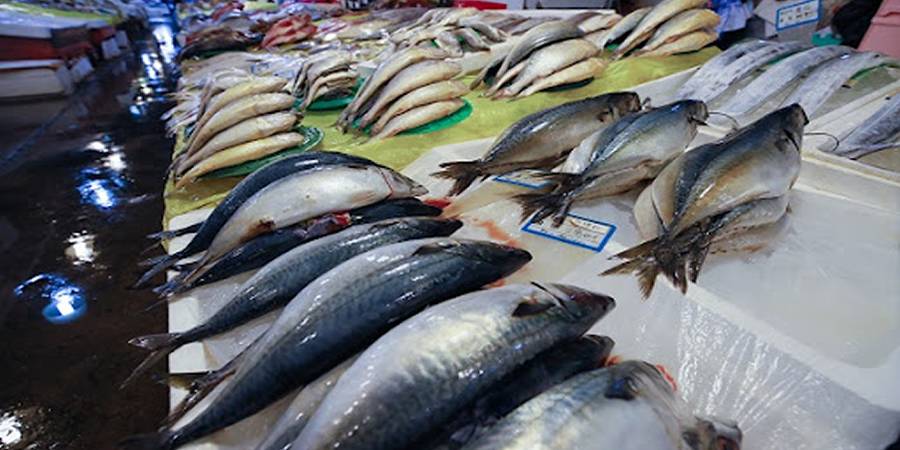
South Korea will push the 2030 fisheries and fishing village leap project, aiming by 2030 for annual seafood production of four million tonnes, annual fishing household income of ₩80 million (US$60,000), and seafood exports of ₩6 trillion (US$4.2 billion).
The Ministry of Oceans and Fisheries drew up the Third Basic Plan for the Development of Fisheries and Fishing Villages, which presents the direction for developing the fisheries industry and fishing villages over the next five years, and announced it on January 29.
The core of the basic plan established this time is:
- Building a sustainable capture fisheries production system;
- Shifting to high value-added aquaculture;
- Advancing seafood production statistics;
- Strengthening competitiveness in the seafood processing industry;
- Reducing distribution costs and stabilising prices;
- Expanding exports and supply chains.
The Ministry of Oceans and Fisheries (MOF) first decided to introduce an "essential fisheries fleet" to secure a stable seafood production base. The essential fisheries fleet refers to an appropriate scale of vessels necessary to ensure a minimum level of seafood production.
Currently, production per domestic fishing vessel is around ₩110 million (US$83,000), and the government plans to raise this to ₩600 million–₩700 million (US$450,000–525,000), the level of Norway, a fisheries powerhouse.
To that end, it plans to push restructuring focused on vessels with low productivity by 2030. It will reduce the current domestic fleet from 60,000 vessels to 40,000, a cut of more than 30%.
To prepare for rising sea temperatures due to climate change, it will promote transferring aquaculture farms from coastal waters to the open sea. In particular, it plans to develop aquaculture farms in the East Sea, where the water is deeper. Alongside this, it decided to expand the farming of high-temperature-tolerant species so that productivity can be maintained in existing fishing grounds.
It will also work to strengthen export competitiveness. Following seaweed (gim) and tuna, which have strong product competitiveness, it will foster new export items.
Policies to stabilize seafood prices by cutting distribution costs will also be strengthened. By expanding farm-produce distribution centers (FPCs) in producing areas and fish distribution centers (FDCs) in consumption areas, and by activating online wholesale and auction platforms and direct-sale stores in consumption areas, the Ministry of Oceans and Fisheries (MOF) plans to reduce distribution stages from the current six to four to minimise distribution costs.
It will promote "making fishing villages vibrant" by expanding support for young people returning to fishing, improving housing and welfare conditions in fishing villages, and overhauling the foreign labor system. It plans to help young people return to fishing even without initial capital and provide places to live by renovating vacant homes.
Choi Hyun-ho, director general for fisheries policy at the Ministry of Oceans and Fisheries (MOF), said, "We will make the fisheries industry and fishing villages the starting point for balanced regional growth and build a sustainable industry and vibrant fishing villages that do not waver amid changes in the external environment."
- Chosun Biz


