|
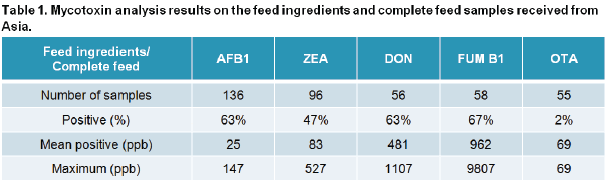
Kemin Industries (Asia) Pte Ltd conducted an extensive mycotoxin survey from August 2013 to March 2016 across nine countries in North-East and South-East Asia, namely Brunei, Indonesia, Korea, Malaysia, Myanmar, Philippines, Taiwan, Thailand, and Vietnam. The Singapore-based Customer Laboratory Services (CLS) received 147 samples of poultry and swine feed and feed ingredients for analysis to detect the presence of mycotoxins. The objective of this study was to identify the presence and contaminating level of mycotoxins in the finished feed and feed ingredients from these Asian countries. Mycotoxins, such as Aflatoxin B1 (63%), Zearalenone (47%), Deoxynivalenol (63%), Fumonisin B1 (67%), and Ochratoxin A (2%) were detected in all feeding stuff. The survey was further classified according to mycotoxins prevalence, percentage of positive samples, and co-occurrence of multiple mycotoxins. The findings revealed co-contamination of mycotoxins in both the feed materials and feeding stuff from Asia and the mycotoxins detected were mainly Aflatoxin B1, Fumonisin B1, Zearalenone and Deoxynivalenol.
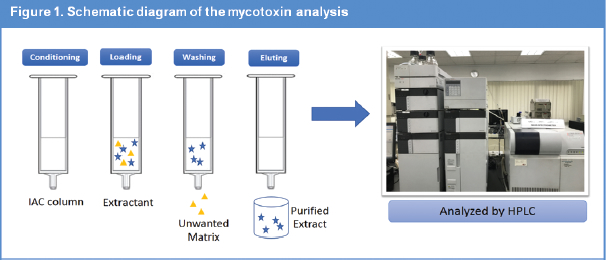 The CLS team performed mycotoxin recovery for five mycotoxins, particularly Aflatoxins (AFB1, AFB2, AFG1, AFG2), Deoxynivalenol (DON), Zearalenone (ZEA), Fumonisin B1 (FUM B1) and Ochratoxin A (OTA) on the 147 samples received. A validated method based on High-Performance Liquid Chromatography (HPLC) was applied to investigate the occurrence of mycotoxins. Figure 1 shows the procedures of the mycotoxin analysis which involved an immuno affinity extraction process in attaining a purified extract. The ZEA, FUM B1 and DON in the purified extract were detected using the High-Performance Liquid Chromatography with Mass Spectrometry detector (HPLC-MS). High-Performance Liquid Chromatography with a fluorescence detector (HPLC-FID) was used for AF and OTA detection. The first step involved an extraction process in removing the mycotoxins present in the feed samples. The extractant was passed through a clean-up column to attain a purified extract which was analysed and quantified using the High-Performance Liquid Chromatography (HPLC). The detection limits of this method for each mycotoxin are AF<3 ppb, DON <20 ppb, ZEA <20 ppb, FUM B1 <50 ppb, and OTA <10 ppb.
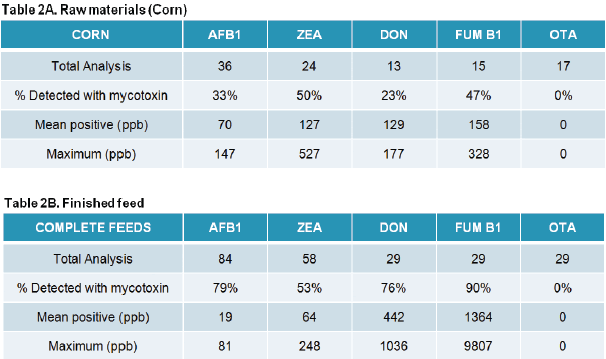
 Survey results In Asia, corn is one of the key ingredients in the production of animal feed. Tables 2A and 2B provide a detailed view of the total analysis, percentage of contaminated samples, mean and the maximum level on the key mycotoxins contamination level detected in corn and finished feed respectively. AFB1, ZEA, DON and FUM B1 were detected in both corn and finished feed, with the latter having much higher positive samples. OTA was not detected in the corn and finished feed samples received. This study showed that FUM B1 contamination of finished feed is not only more frequent but also accompanied by higher contamination level as compared to other mycotoxins. For the corn samples, the most prevalent mycotoxin detected was ZEA, which hasan average of 127ppb and maximum levels of 527 ppb.
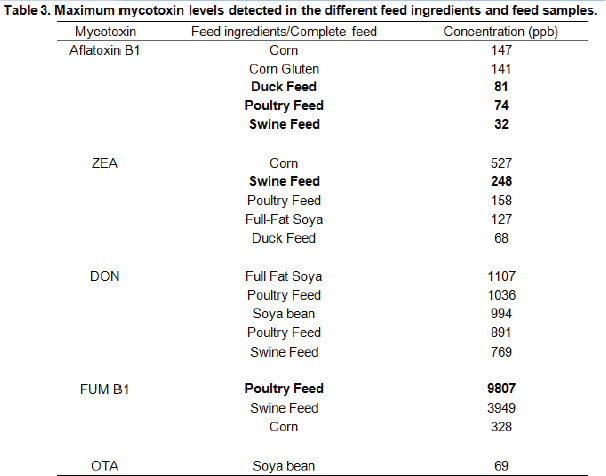
Table 3 shows the maximum mycotoxin levels detected in feed ingredients by commodity (corn and soya bean) and complete feed (swine, poultry, duck). Regarding commodity, corn samples were found to reach high contamination levels of mycotoxins like AFB1 (147 ppb), and ZEA (527 ppb). There is a high natural occurrence of deoxynivalenol in soybean, with the highest concentration value of 1107 ppb detected in the full-fat soya and an average detection level of 758 ppb recovered. Swine feed contain highest ZEA while poultry feed has the highest DON and FUM. These three mycotoxins are recognised to be most commonly found mycotoxins that associated economic loss. Of all, pigs are known to be most sensitive to Zearalenone which can affect their reproductive system.
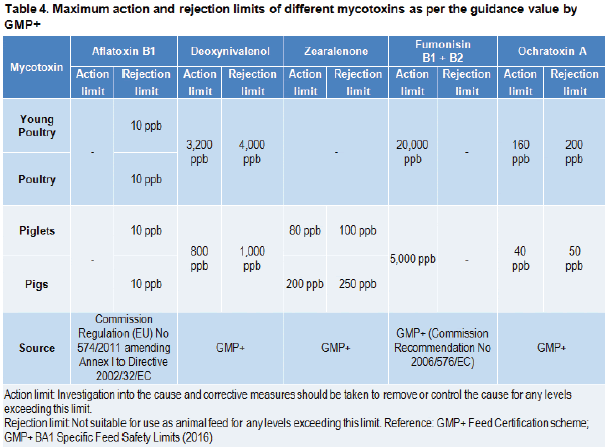
The maximum permissible limit for Aflatoxin B1 is 5 ppb for young animals and 20 ppb formature animals such as poultry and pigs. Low permissible limits were set for Aflatoxin B1 because it is an undesirable toxic substance that poses potential dangers to animals' and humans' health. Of note was the finding that majority of the complete feed samples which weretested positive for Aflatoxin B1, had contamination values exceeding the EU recommended permissible limits of mycotoxins in young monogastric animals.
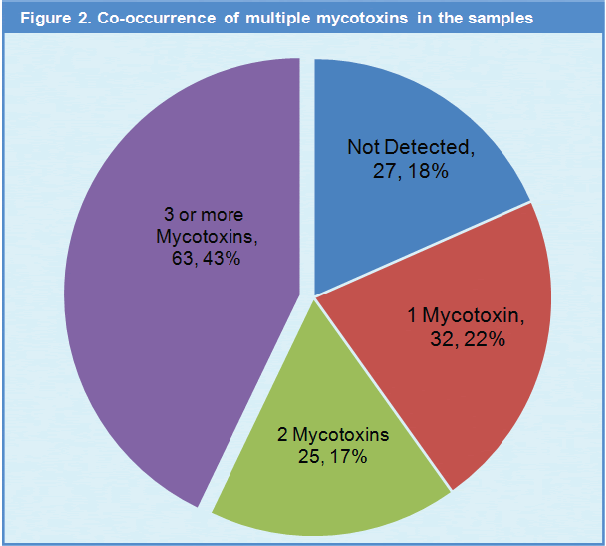
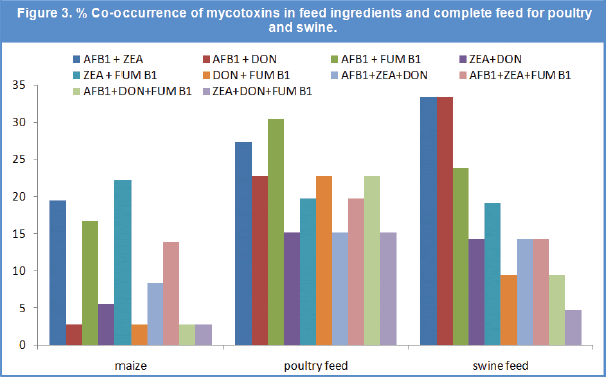
Figure 2 shows the percentage of mycotoxins detected and co-occurring in the samples received. 82% of the samples analysed were contaminated with at least one mycotoxin. The high percentage of samples at 43% that contained three or more mycotoxins was a concern. The high occurrence of multiple mycotoxins co-occurring in the feed and feed ingredients can pose adverse effects to the animals' health due to possible interactions of the mycotoxins, which may exaggerate the toxicity symptoms in the animals' body.
Conclusion
 *Dr. Joanne Ho (above, left), Ph.D. (Joanne.Ho@kemin.com) is Product Manager and Hwee Ching Ong (above, right) is Senior CLS Associate with Kemin Industries (Asia) Pte Ltd, Singapore. A list of references is available on request from the first author.
Visit Kemin at: www.kemin.com
|