


January 26, 2024
Sea areas in Singapore available for fish farming but local producers face tech hurdle
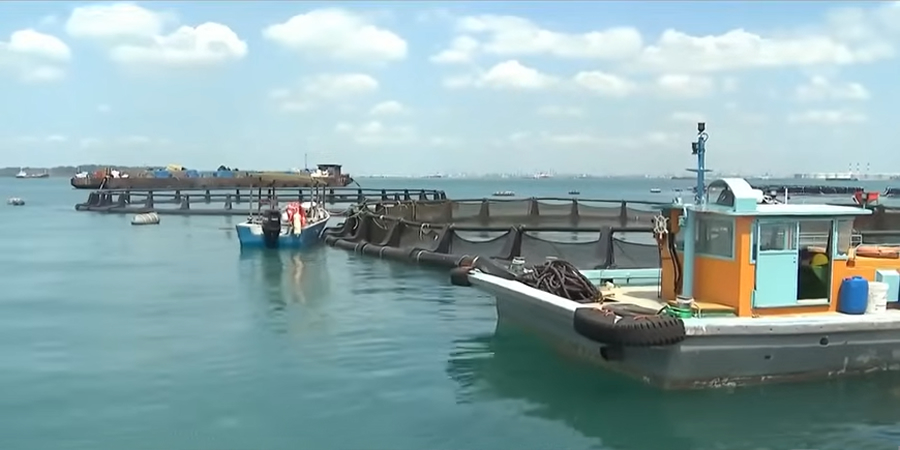
Two new areas of sea space are going for sale in the south of mainland Singapore — but domestic seafood farms would have difficulties acquiring the plots due to technological shortfalls and high investment costs, Channel NewsAsia reported.
Around the size of seven football fields, each plot can be purposed for fish or crustacean farming. The sale plan was announced by the Singapore Food Agency in mid-January and tenders will close in April.
The agency added that it is working with local environmental groups to launch more sea spaces for sustainable fish farming.
The Southern Islands sea space is a suitable area for aquaculture due in part to its "more pristine and clean" water, according to Leow Ban Tat, chief executive officer and founder of Aquaculture Centre of Excellence.
The sea space is "quite large" and provides bidders a potential area to operate at scale, Dr. Michael Voigtmann, co-founder and chief technology officer of Singapore Aquaculture Technologies pointed out.
"Scale is very important because at the end of the day, we all have to compete and we need to provide customers with a product that they are able to afford and pay for. And in farming, without scale, that's quite often not possible," Dr. Voigtmann said.
The size of the space, however, is not enough to get farms to bite, due to investment in new technology required. Bidders must adopt a closed-containment system to prevent damaging the environment. Ramping up technology would be a hurdle for traditional fish farmers.
Furthermore, powering such farms will be a challenge as closed-containment aquaculture systems are very energy intensive, said Dr Toh Tai Chong, a marine biologist from the National University of Singapore.
"With the technological requirements, there will be a huge amount of investment of costs involved on the monitoring front, the filtering of wastewater, as well as to optimise the production systems," he explained.
"The bottleneck would be technology and understanding how to run this kind of system (as) it still requires a lot of know-how," said Dr. Farshad Shishehchian, CEO and co-founder of Blue International Group. These include choosing the right species that can thrive and the type of feed used, he added.
The SFA indicated the two new plots will meet about 80% of Singapore's current production.
- CNA


