


January 22, 2026
Canada sees jump in farmed salmon imports as British Columbia farms start to close down, report reveals
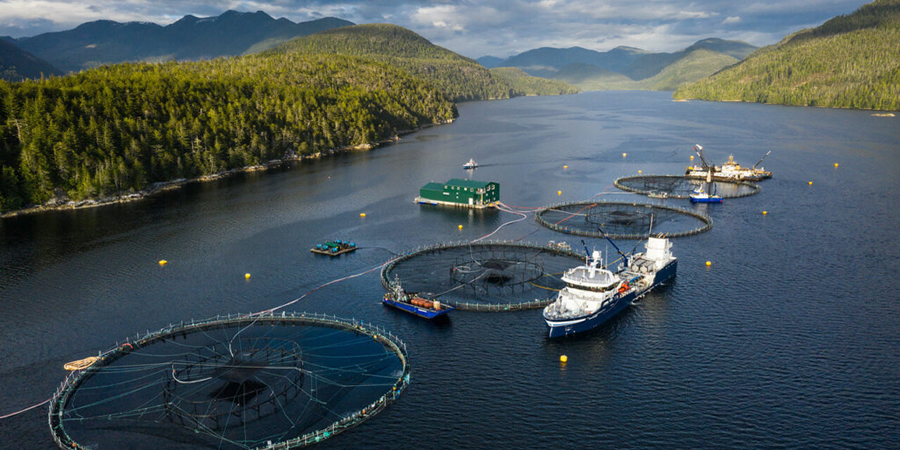
A new report from the Canada Aquaculture Industry Alliance (CAIA) indicates the country's imports of farmed salmon surged as the country began the process of closing down salmon farms in British Columbia.
The report found that aquaculture production in the country has dropped since 2016 and farmed salmon production in BC has dropped by 40% since 2015. Over that same period of time, imports of salmon have more than doubled to over C$700 million (US$503 million), mainly from international suppliers.
"Canada's aquaculture production is a national economic treasure, but it has been seriously weakened by irresponsible government policies," CAIA president and chief executive officer Timothy Kennedy said. "Once a world leader in seafood, Canada now underperforms against global competitors, jeopardising Canada's independence and food security at this time of increasing global tensions."
According to the industry snapshot released by the CAIA, the aquaculture sector generated C$1.36 billion (US$977 million) in 2024, far below the peak inflation-adjusted value of C$1.73 billion (US$1.24 billion) in 2018. Production also dropped to 160,318 metric tonnes (MT) in 2024, down from over 200,000 MT in 2016.
The CAIA said its analysis found aquaculture supported 18,074 full-time jobs between 9,386 primary production jobs and 8,688 jobs in the processing sector. Of that, three-quarters of the total is in the salmon-farming sector, which Kennedy said is still underutilised.
"With the longest coastline in the world, Canada's seafood-farming sector has massive, largely untapped potential," Kennedy said. "We are using only about 1% of Canada's potential. With positive policy signals and similar supports given to the rest of the agriculture sector, we could feed more Canadians with high-quality, home-grown, and renewable proteins, keep rural and coastal communities working and growing, achieve meaningful Indigenous reconciliation, and boost Canada's national and export economies."
The drop in aquaculture production in Canada has largely come from a concerted effort by the country's government to reduce the number of salmon farms in its waters for over half a decade
The Department of Fisheries and Oceans (DFO) in Canada first announced its plans to close salmon farms in the Discovery Islands, BC, in December 2020, kicking off a series of court cases that delayed the timeline but ultimately didn't stop the closures. DFO announced on February 17, 2023 that it was done renewing licenses in the region, and by that time, multiple salmon-farming companies had already pulled out of the region due to the regulatory uncertainty.
In 2024, the DFO then announced it was setting what amounted to a time limit on in-ocean net-pen salmon farming, saying all net-pen salmon aquaculture would need to transition to closed-pen or land-based operations by 2029.
DFO said in multiple announcements that the decision was related to protecting wild species, particularly from the threat of sea lice.
The BC Salmon Farmers Association (BCSFA) said the surge in imports of foreign salmon shows that the demand for the product is robust and the DFO has forced Canada to miss out on the growth.
"Salmon remains Canada's most consumed seafood," BCSFA executive director Brian Kingzett said. "The data clearly shows demand is strong. With long-term regulatory certainty, Canada has a real opportunity to produce more of this food at home."
Kingzett added that with the right framework, salmon farmers in BC are open to farming more of the species and meeting that demand locally to reduce Canada's dependence on trade.
That stance runs parallel to some of the stated goals of Canadian Prime Minister Mark Carney, who has pushed for buying Canadian products and prioritising Canadian jobs in the face of trade pressure from the US.
Kennedy said if Canada is serious about supporting domestic aquaculture, it can reverse the negative trends through policy actions.
"Four priorities are immediately available to revitalise the sector," Kennedy said. "First, cancel the BC ban and establish a smart plan for BC salmon farming with longer-term licenses to attract significant foreign direct investments in BC and Atlantic Canada. Second, establish crisis support and modernisation of federal management for the shellfish sector. Third, designate Agriculture and Agri-Food Canada as the federal development lead for the sector. Fourth, withdraw the National Marine Conservation Area Proposal for the south coast of Newfoundland that jeopardises all seafood production in the region."
Kingzett said the sector has the potential to generate an additional C$2.5 billion (US$1.8 billion) in economic output and 9,000 new jobs by 2030 if the government gets behind the sector.
"With the right framework in place, BC salmon farmers are ready to support Canada's food system and help build a stronger Canada," he said.
- SeafoodSource


