


January 20, 2023
Norway-based Aquaculture Research Station opens advanced research facility for onshore fish farming
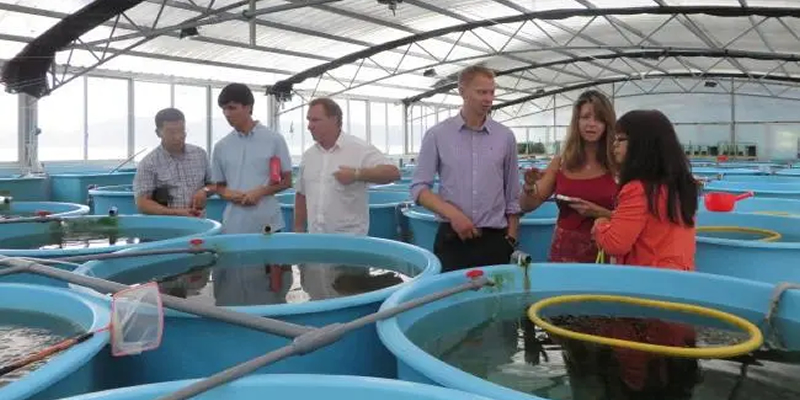
The Aquaculture Research Station in Tromsøn, Norway, opened one of the world’s most advanced research facilities for onshore fish farming this month.
In a newly constructed 1,350 square metre hall, an educational and research facility, called RASforsk, has been established that creates training opportunities for young people, thus potentially contributing to jobs in rural areas and providing the aquaculture industry more knowledge on onshore fish farming.
Norwegian State Secretary Kristina S. Hansen from the Ministry of Trade, Industry and Fisheries and County Councillor for Industry Karin Eriksen officiated the opening of the facility in Kårvika, Ringvassøya.
Recirculating aquaculture systems (RAS) is the focus of the facility. Based on this system, RASforsk can take in both fresh water and sea water as needed. To avoid high energy consumption, almost 100% of the water is recycled.
"The aquaculture industry is undergoing rapid technological developments, and in order for education and research to keep up, it is essential that modern research facilities are developed in line with national requirements," said Rita Sæther, general manager of the Aquaculture Research Station, which is jointly owned by Nofima and UiT The Arctic University of Norway. "There is a great need for training and transfer of knowledge to the industry.
"The industry is aware of how important knowledge is for the well-being of the fish, particularly now as developments indicate that fish should be kept on land longer before being released into the sea, or in some cases, be farmed on land right up to slaughter."
"Fish welfare is very important, and technology must thus be adapted to the fish’s requirement for good water quality," said Bente Torstensen, division director at Nofima. "This means that temperature, salinity, oxygen, carbon dioxide, ammonia, pH and biofilter activity must be closely monitored. This can be demanding, and education and research are important for the aquaculture industry to develop its use of RAS technology."
"Training candidates in an active research community is an unconditional benefit both for knowledge and industry development," said Katrine Tveiterås, pro-rector at UiT – The Arctic University of Norway. "The industry needs more minds who know RAS, and there we have a particularly important task to train candidates who can contribute to healthy fish, better fish health and sustainable production. We are pleased that RASforsk gets better facilities for this. Because developments are so rapid, it makes sense to coordinate research, education and industry partnerships, which the joint ownership of the Aquaculture Research Station enables."
- Nofima


