


January 16, 2026
European initiative creates early-life feeding protocols to improve cod farming
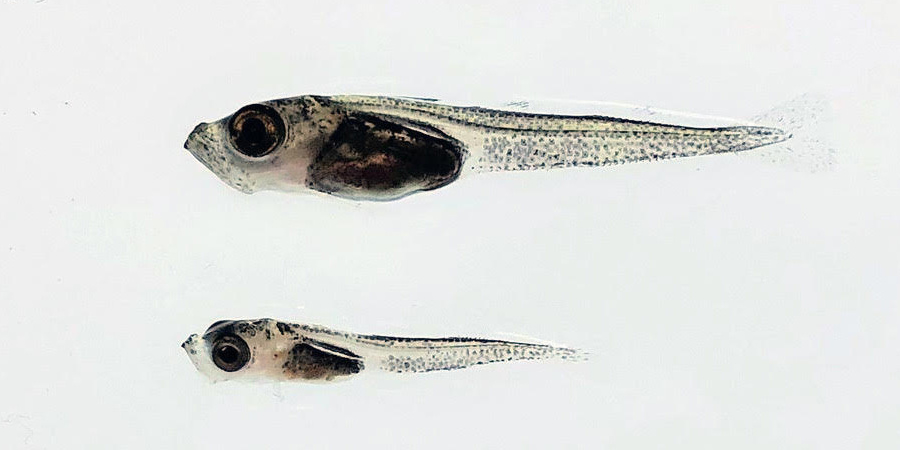
European research initiative EarlyCOD project, led by SPAROS in Portugal with partners CIIMAR (Portugal) and Planktonic AS (Norway), has developed early-life feeding protocols to improve cod farming success.
Cod farming has faced persistent challenges, including slow juvenile growth and high mortality from stress and disease, resulting in variable quality and higher costs. The EarlyCOD project was launched to address these issues through improved nutrition and breeding innovation.
Researchers developed a new range of aquafeeds and an early feeding regime that combines novel inert microfeeds with live cryopreserved plankton. This approach strengthens cod larvae during the critical weaning stage, reducing mortalities and stress while improving overall juvenile quality and reducing production costs. By integrating nutrition research, experimental trials, and industrial-scale validation, EarlyCOD has delivered feed protocols that markedly enhance cod larval performance and survival.
Project trials showed tangible benefits: tailored diets led to substantially fewer skeletal deformities in cod larvae, improved organ development, and more robust juveniles.
"These innovative nutritional strategies not only enhance early development and maturation, but also lead to juveniles of superior quality," the project team reported. Such outcomes are expected to help cod hatcheries produce healthier young fish, addressing a key bottleneck in the industry. As Norway's cod farming sector experiences rapid growth, these results come at a crucial time, providing advanced protocols to support the production of high-quality cod juveniles at scale.
The project concluded with a final webinar that brought together an international audience to share groundbreaking results in Atlantic cod aquaculture.
Co-organised by Norway's Cod Cluster and the EarlyCOD consortium partners (SPAROS, Planktonic, and CIIMAR), the online event drew participants from three countries – Norway, Portugal, and Iceland. Attendees included 28 researchers from leading research organisations such as the Institute of Marine Research (IMR), NOFIMA and NTNU – Norwegian University of Science and Technology in Norway, the Marine and Freshwater Research Institute (MFRI, Iceland), along with 40 experts from aquaculture sector companies, as well as representatives from industry associations and government agencies.
In total, 76 participants joined the webinar. Nine cod farming companies were represented among the industry participants, including leading Norwegian cod producers Ode, Norcod, Vesterålen Havbruk, KIME Akva, Havland, Elska Austevoll, Lofotyngel, and Ísfélag (Iceland).
Presentations during the webinar spotlighted the project's findings and their practical implications. From Planktonic AS in Norway, Nils Tokle discussed the successful use of cryopreserved plankton (cryoplankton) as a live feed alternative, sharing how this innovation contributed to improved larval growth and health. João Henriques of Sparos presented results on co-feeding protocols, including insights from larval histology studies and the reduction of skeletal deformities observed when combining cryoplankton with the new microdiets.
Project coordinator Luis Conceição showed that early co-feeding protocols of cryoplankton with microdiets can lead to superior cod growth performance. Representing CIIMAR (University of Porto, Portugal), Benjamin Costas highlighted analyses of the immune and oxidative status of cod larvae reared on EarlyCOD diets, indicating enhanced larval resilience and condition under the optimised feeding regimes.
Industry perspectives added depth to the discussions. Kristine Drage of Akvaplan‐NIVA (Norway) spoke on the practical larval quality parameters monitored at cod hatcheries, addressing which metrics are most useful on the farm and where external support or new innovations might further improve juvenile quality. From Ode, a Norwegian cod farming company, Frank Mlingi tackled the issue of batch variability in larval robustness, exploring why some groups of cod larvae perform better than others and how consistent feed quality and protocols can mitigate those differences.
These talks were followed by a lively discussion session, moderated by Antonio Coli (Planktonic), in which speakers and attendees debated questions on larval deformities, live feed types, breeding effects, and long-term performance of cod – all pointing to the need for continued knowledge-sharing in this growing sector.
The final webinar marked a milestone conclusion to the EarlyCOD project's collaborative efforts. EarlyCOD (2023–2025) was led by SPAROS in partnership with CIIMAR (Interdisciplinary Centre of Marine and Environmental Research, Portugal) and Planktonic AS (Norway), with significant support from Ode, and Nord University in Norway.
The EarlyCOD consortium expressed optimism that these innovations will bolster the supply of high-quality cod juveniles for aquaculture, helping to meet growing demand while improving cod welfare and reducing losses. The collaborative success of EarlyCOD also sets the stage for future R&D initiatives in aquaculture nutrition and breeding.
- Aquafeed.com


