


January 12, 2023
Vietnam remains dependent on importing animal feed
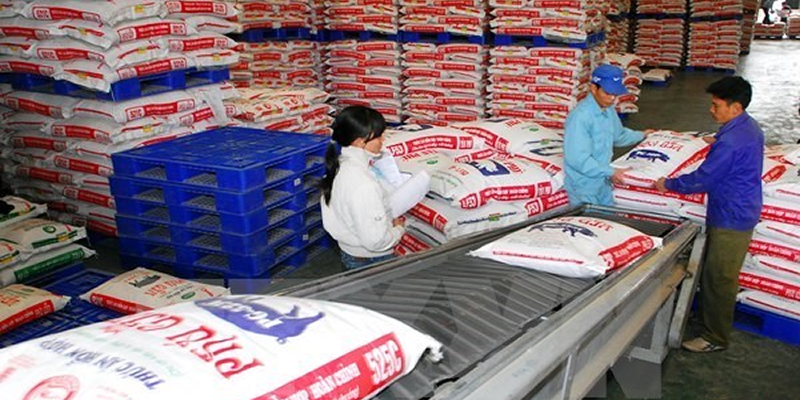
Vietnam is enjoying a high total export turnover of agricultural, forestry and fishery products, but it still has to import a large amount of raw agricultural materials and animal feed.
Statistics from the General Department of Vietnam Customs revealed that the import turnover of animal feed and the input for animal feed production processes reached US$5.16 billion at the end of November 2022, a rise of 14.6% compared to the same period in 2021. It is calculated that the total import turnover of this merchandise could come to $5.6 billion in the entire 2022. If counting those for poultry and aquatic feed (corn and soybean), this figure could become nearly $10 billion.
Standing vice president Nguyen Xuan Duong of the Vietnam Animal Feed Association attributed this continuous rise to the development of the livestock sector in the country, leading to a higher demand on this merchandise, while the domestic production can no longer satisfy this need and the corn growing area is unchanged.
It is estimated that Vietnam requires 33 million tonnes of animal feed each year, only 30-35% of which is manufactured domestically.
Additionally, certain animal feed types cannot be produced in Vietnam like soybean meal, palm kernel expeller, fish meal, meat and bone meal, as well as vitamin supplements.
Deputy Director of the Department of Livestock Production Tong Xuan Chinh stated that out of the 269 registered animal feed producers, only 90 are FDI businesses with modern production lines and large capacity. Others are of small scale with outdated technologies and weak product quality.
More remarkably, these FDI enterprises are occupying 60-70% of the market shares, but they merely focus on the manufacturing and trading stages and not the development of material growing surface area. This leads to a dependence on imported materials.
To achieve a more sustainable agriculture that is not too affected by continuously increasing costs and supply chain disruptions, Director of the Department of Livestock Production Duong Tat Thang proposed a rise in the area to grow animal feed materials (corn and cassava) in low-yield rice fields.
He added that the Agriculture and Rural Development Ministry has directed his organisation to work with large corporations in the field to launch models of animal feed material planting in Vietnam's central and highlands provinces, where natural conditions are ideal for the growth of such plants.
In recent times, the Netherlands' De Heus Group has examined possible sites for corn and cassava growing in the three provinces Dak Lak, Gia Lai and Kon Tum.
Croplife Vietnam suggested that Vietnam should develop the area for corn and soybean since these two are the main ingredients in animal feed.
- SGGP


