


June 22, 2026
Vietnam's Dong Nai City to dismantle floating fish farms by Q3 2026 amid urban redevelopment
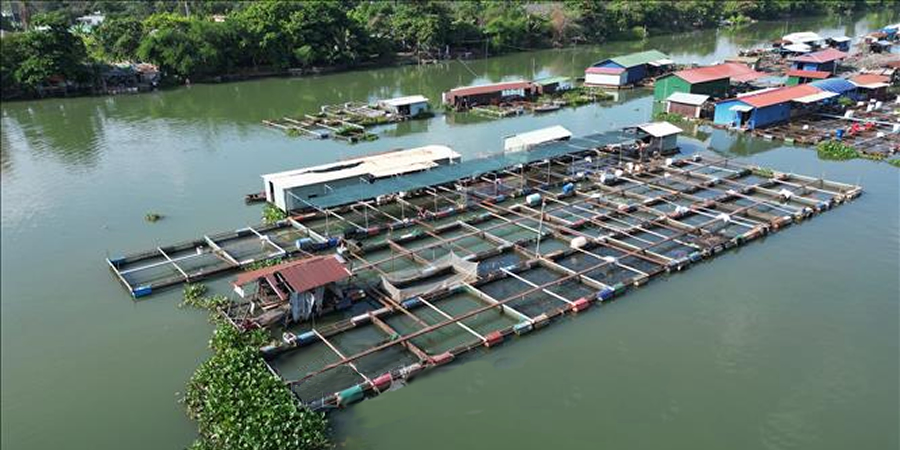
Nearly 200 households operating over 1,400 fish cages on the Dong Nai River face relocation as authorities cite water quality, drinking water protection and disease risk concerns.
Dong Nai City authorities have set a target of completing the dismantling of floating fish farms on the Dong Nai River by the third quarter of 2026, affecting 195 households operating 468 rafts and over 1,400 fish cages in Tran Bien ward.
The clearance plan is intended to protect water quality in the Dong Nai River, a major drinking water source for the Southeast region, while supporting urban redevelopment along the riverside. According to the Tran Bien Ward People's Committee, the area has operated as a fish farming community for many years, but authorities say cage aquaculture is no longer compatible with current urban planning and have repeatedly flagged concerns over waste discharge from farming and residential rafts affecting water quality and waterway safety.
Pham Duc Hoang, Vice Chairman of the Tran Bien Ward People's Committee, said mobilisation teams are encouraging households to harvest stock early and proactively dismantle cages on the Cai and Dong Nai rivers ahead of the third-quarter deadline. The city has established three task forces to engage directly with affected households, record concerns, and implement support measures including vocational training, job placement and access to social housing. Authorities have also urged farmers not to restock with new fish.
Cage farming on Dong Nai City's waterways has faced recurring production losses from extreme weather and water quality fluctuations. At Tri An Lake, heavy rain at the start of the rainy season triggered mass fish deaths due to oxygen depletion and sudden shifts in water quality indicators, with one farming household reporting losses of nearly 60 tonnes of fish, equivalent to more than 90% of stock across ten cages. The Department of Agriculture and Environment attributed the losses partly to excessive stocking density under largely unregulated, spontaneous farming practices, and said the sector is currently being reorganised.
- Dan Viet


